Editorial Series | Founder Notes | Your Best Misbehavior
description: Is Friday the 13th lucky? Its real history, why Mexico fears martes 13 instead, and a whimsical founder ritual for November 13, 2026. Target keyword: is Friday the 13th lucky Secondary keywords: Friday the 13th meaning, why is Friday the 13th unlucky, Friday the 13th history, Friday the 13th marketing ideas, martes 13, Friday the 13th for entrepreneurs, women entrepreneurs
Your Best Misbehavior
Friday the 13th is not unlucky by any evidence; it is unlucky by agreement. Its meaning is surprisingly young: Friday and the number 13 were feared separately for centuries, and the two only fused into one dreaded date in the nineteenth century, becoming famous in the twentieth with help from a 1907 novel. For a founder, that makes Friday, November 13, 2026, the last one of the year, a rare opening: while everyone else is being careful, you can be a little mischievous, and send, launch or ask for the thing you have been politely postponing.
There are days that arrive with a costume already on.
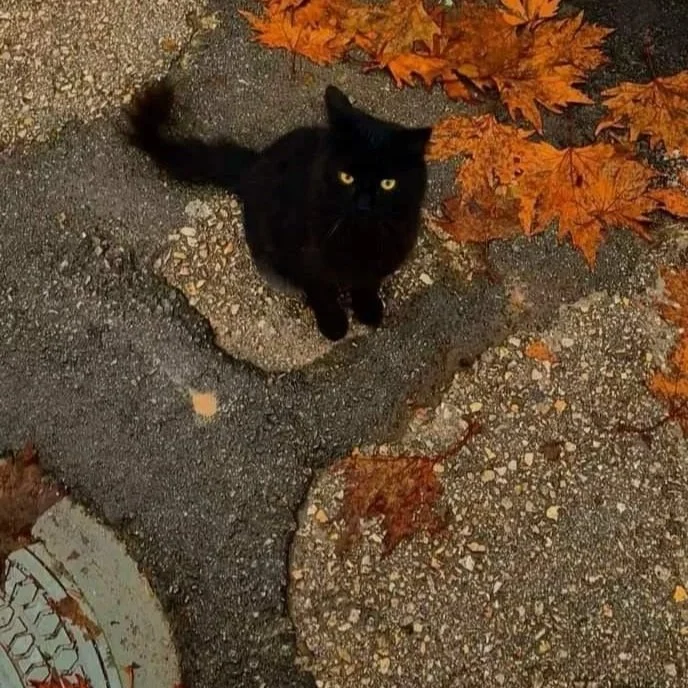
Friday the 13th comes dressed for a story: a black cat crossing the pavement with impeccable timing, a ladder leaning against a wall like a dare, an elevator that skips from twelve to fourteen as if nothing happened in between. Everyone knows their role. Be careful. Don't sign anything. Don't tempt fate.
I have always loved Friday the 13th. I have always thought there was something magical about it. When I look at the date, I do not see a warning. I see a wink.
So this is a note about the date's real history, which is stranger and more recent than the legends suggest, and about why a day the world approaches with caution might be the best day of the season to be a little bold. Not reckless. Not on your worst behavior.
On your best misbehavior.
Friday the 13th meaning: two old fears that met rather late
The most elegant thing about Friday the 13th is that nobody knows exactly where it came from. Stephen Winick of the American Folklife Center at the Library of Congress told NPR member stations in 2024 that people began calling the date unlucky without ever saying why. What folklorists can tell you is that the superstition is a marriage of two older fears, and that the wedding was late.
The fear of Friday is medieval. Moira Marsh, a folklore librarian at Indiana University Bloomington, traces it to the Middle Ages and to Friday as the day of the crucifixion. Chaucer gave it a line of poetry in The Canterbury Tales in the fourteenth century, "And on a Friday fell all this mischance", perhaps the first time an English writer blamed a weekday for a plot twist.
The fear of 13 is younger than you think. Marsh places the suspicion of the number around the seventeenth century, and notes that before the Reformation thirteen may even have been seen as a good number, linked to the thirteen at the table of the Last Supper. The darker reading came later: Judas as the thirteenth guest, and the rule that thirteen should never sit down to dinner. There is a Norse version too, popularised by Donald Dossey, in which the trickster Loki arrives as the uninvited guest at a feast of the gods and arranges the death of Balder. A good story; whether it is the origin of anything is another matter.
The two fears met in the nineteenth century and became famous in the twentieth. Winick's earliest finds are French: an 1834 play, and a line in the Revue de Paris pairing Fridays with the number thirteen as bringers of luck, and not the good kind. In England, Marsh says, the first recorded instance in print dates to 1913. In between sits the hottest theory, which National Geographic attributes to the author Nathaniel Lachenmeyer: that "Friday the 13th" as a single, branded fear owes much to a 1907 novel.
The Knights Templar story is a beautiful myth (and a recent one)
You will read, everywhere, that it all began on Friday, October 13, 1307, when King Philip IV of France had the Knights Templar arrested. The arrests are real. The origin story is not.
National Geographic is plain about it: the arrests are not the origin of the superstition, and the link was popularised much later, not least by Dan Brown's The Da Vinci Code. Asked about the Templars and Judas, Winick offered the most honest sentence in the literature: experts do not know if any of those things are true.
I find this delicious. A modern fear went looking for an ancient pedigree, found a story about knights and secrets and a king, and wore it like borrowed jewellery.
Thomas W. Lawson's 1907 novel and the birth of a brand
In February 1907, the Boston financier Thomas W. Lawson published a novel called Friday, the Thirteenth. It is a Wall Street story about a reckless trader and a market panic that falls on that very date. It is still free on Project Gutenberg.
The most famous unlucky day in the English-speaking world may owe much of its modern fame to a financial thriller. A man who understood markets understood that a date could carry fear, and he put it in a title. Long before anyone used the phrase, Friday the 13th was a piece of content.
The twentieth century did the rest. The fear acquired a Greek name, paraskevidekatriaphobia, from Paraskevi (Friday) and the word for thirteen. It acquired architecture: according to a 2002 estimate by an Otis Elevator executive, reported by Boing Boing, around 85% of buildings with thirteen or more floors and Otis elevators had no floor labelled 13. The fourteenth floor is, of course, the thirteenth. Everyone simply agrees not to mention it.
That is the purest definition of a superstition I know: not a fact, a consensus.
Why is Friday the 13th unlucky? What the data actually says
Search why Friday the 13th is unlucky and you will meet a famous number: $800 to $900 million lost in business on the day, because people refuse to fly, buy houses or act on a stock tip. The estimate comes from Donald Dossey of the Stress Management Center and Phobia Institute and has been repeated by news outlets for years. I have found no published study behind it, so treat it as folklore about folklore: a striking estimate, not a measurement.
The accident research is mixed and, frankly, funny. A 1993 BMJ study by public health researchers in West Sussex reported more transport-accident hospital admissions on Fridays the 13th and concluded, with a straight face, that the day was "unlucky for some." A 2004 study in BMC Public Health, which re-examined Finnish data, found no significant difference in road accidents. And in 2008, the Dutch Centre for Insurance Statistics reported that Fridays the 13th were slightly safer than ordinary Fridays, with an average of 7,500 traffic accident reports against 7,800 on other Fridays.
The honest summary: there is no reliable evidence that Friday the 13th is dangerous. There is plenty of evidence that people think about it differently. For a founder, that is the interesting part.
Is Friday the 13th lucky? Depends which border you are standing on
At B0LD we work across Canada, Mexico and the USA, in English, Spanish and French, and the first thing you learn across borders is that even bad luck is local.
In Mexico and much of the Spanish-speaking world, the feared day is Tuesday the 13th. Martes 13. The saying, as La Razón in Mexico records it, is "Ni te cases ni te embarques, ni de tu casa te apartes", usually shortened to "En martes, ni te cases ni te embarques": on a Tuesday, don't marry and don't set sail. Martes belongs to Mars, the god of war, and Greece shares the Tuesday suspicion. On Friday, November 13, 2026, in Mexico, nobody is especially worried; the next martes 13 is not until April 2027.
In Italy, the unlucky number is 17. Written in Roman numerals, XVII can be rearranged into VIXI, "I have lived", an inscription found on Roman tombs. The feared date is venerdì 17. Thirteen, meanwhile, is usually lucky: the old Totocalcio football pools asked players to predict thirteen matches, and "ho fatto tredici", I've hit thirteen, came to mean hitting the jackpot.
In France, Friday the 13th has a devoted following. The national lottery operator FDJ says around six million people play the Loto on a vendredi 13, roughly twice the usual number. The French, it seems, have long suspected what I have.
And 13 has always had defenders. In Judaism, thirteen is the age of the bar mitzvah, and there are thirteen attributes of mercy and Maimonides' thirteen principles of faith. In some years the moon is full thirteen times. In 1881, a group of New Yorkers founded the Thirteen Club, dining thirteen to a table in Room 13, walking under ladders, purely to mock the superstition.
So is Friday the 13th lucky? It is unlucky in English, indifferent in Spanish, rather promising in French and Italian, and a fiction everywhere. It is whatever you decide to make of it.
Friday the 13th for entrepreneurs: when everyone else is careful, it is your turn
If everyone else is in a slightly negative mindset, holding back, keeping their heads down for one day, then the room is quieter than usual. The feed is full of jokes about bad luck and very few people actually asking for anything. Instead of a sign of bad luck, it might be a sign of good luck: the day the stage clears a little, and it is your time to shine.
The strategist in me likes the logic: when a crowd agrees to be cautious, boldness becomes rare, and rare things are noticed. The mystic in me will admit the other half. There were nights when I meditated just to believe in things that had not happened yet. A date the whole world agrees is charged with something seems an excellent day to borrow some of that charge and point it somewhere useful.
That is your best misbehavior: not rudeness, not chaos, but the well-mannered mischief of a woman who has decided, for one day, to stop asking a superstition for permission.
Above all, it adds whimsy to your day.
The Friday the 13th ritual for founders: 8 ideas for your best misbehavior
These are not Friday the 13th marketing ideas in the usual sense, the 13% discount and the black-cat clip art. You need to do one thing the cautious version of you would have saved for later.
Launch the thing you have been hiding. The offer in a folder, the page written and unpublished, the idea you keep "refining". Publish it on the 13th; if anyone asks why now, you have the best excuse in the calendar.
Create a black cat offer. Not a sale. A small, slightly strange, deliberately limited thing that exists for one day: an edition of thirteen, a single consultation slot, a bundle with a name that makes people smile. Premium brands do not need discounts to create urgency; they need a reason. To sharpen it, One Offer, One Sentence shows how to write any offer in one line.
Send the bold pitch. The editor, the podcast, the collaborator slightly out of your league. Everyone else is waiting for a luckier day. If you need a structure, the Digital PR Pitch Vault holds pitch templates for earning press.
Keep a 13-minute ritual. Before you open your inbox, set a timer for thirteen minutes, light a candle if you are that kind of founder, and write one sentence that begins "If luck were entirely on my side today, I would..." Then do the smallest version of whatever you wrote.
Write your lucky-13 list. Thirteen proofs that you are further along than you feel: a client who stayed, a sentence you are proud of, a fear you already outgrew. Keep it.
Post something playful. Tell your audience the real history in a sentence. A brand that can be witty about a superstition signals confidence without announcing it.
Make one small daring ask. A referral, a price you have been afraid to say aloud, a meeting you have been too polite to request. Small enough to survive a no, daring enough that a yes would change your week.
Break one business superstition. Never post on a Friday, never show the price, never launch before the website is perfect. Choose one you have never actually tested, and test it. As I like to say, let me fact-check this and test it in the market first. A superstition is only a hypothesis nobody has bothered to check.
For the women building on their best misbehavior
Many of us were raised on good behavior: be agreeable, wait your turn, don't ask for too much. It is a beautiful set of manners and a terrible business strategy.
Your best misbehavior is not the opposite of grace. It is grace with intent: sending the pitch without apologising in the first line, naming the price and then being quiet, publishing the post that sounds like you rather than the one that sounds safe. None of it is rude. All of it is a small refusal to stay invisible for the comfort of others.
If you need a permission slip, take the date. On a day when everyone expects a little strangeness, a woman being slightly bolder than usual is simply in season.
The ritual
On the evening of Thursday, November 12, write your one act of best misbehavior on a card: the pitch, the launch, the ask, the superstition you will break. On Friday the 13th, do it before noon.
Then bring it to the B0LD Skool community: post your card in a sentence, tell us what happened, and invite one founder friend who needs the permission slip. Mischief is much harder to quietly abandon when other women are waiting to hear how it went.
Where to go deeper: Positioning Sprint in a Box, the Digital PR Pitch Vault and the B0LD community
If the thing you have been hiding is a direction rather than a post, Positioning Sprint in a Box ($36), our compact positioning sprint workbook, is made for a short push to decide and commit. If your best misbehavior is a bold pitch, the Digital PR Pitch Vault ($36) holds pitch templates for earning press, so the daring part is the sending, not the writing.
Explore B0LD, a boutique brand-positioning agency across Canada, Mexico and the USA, at b0ld.ca.
Share your act of best misbehavior in the B0LD Skool community.
FAQ
Is Friday the 13th actually unlucky? There is no reliable evidence that it is. Studies are mixed: a 1993 BMJ paper reported more transport-accident admissions, a 2004 Finnish re-examination found no significant difference, and Dutch insurance data from 2008 showed slightly fewer accident reports than on ordinary Fridays. The superstition is real; the bad luck is not demonstrated.
Where does Friday the 13th come from? Nobody knows for certain. Friday was considered unlucky from the Middle Ages, the number 13 from around the seventeenth century, and the two merged into one feared date in the nineteenth century, becoming widely known in the twentieth, with Thomas W. Lawson's 1907 novel Friday, the Thirteenth often credited with popularising it.
Did Friday the 13th start with the Knights Templar? No. Some Templars were arrested on Friday, October 13, 1307, but historians and folklorists treat the link to the superstition as a much later invention, popularised in part by The Da Vinci Code.
Why is Tuesday the 13th unlucky in Mexico and Spain? In the Spanish-speaking world, the feared day is martes 13, often linked to Mars, the Roman god of war, after whom Tuesday is named. The saying is "En martes, ni te cases ni te embarques": on a Tuesday, don't marry and don't set sail. Greece shares the Tuesday superstition, while Italy fears Friday the 17th.
What are good Friday the 13th marketing ideas for a small business? Skip the discount. Use the date as a reason to do something bold: launch what you have been hiding, create a small one-day "black cat" offer, send an ambitious pitch, post the real history with some wit, or make one daring ask. The date gives you a playful excuse; the boldness is what gets noticed.
Sources
Kline, K., "The possible origins of Friday the 13th and other unlucky days," Georgia Public Broadcasting / NPR (September 13, 2024), quoting Moira Marsh (Indiana University Bloomington) and Stephen Winick (American Folklife Center, Library of Congress): https://www.gpb.org/news/2024/09/13/the-possible-origins-of-friday-the-13th-and-other-unlucky-days
Little, B., on Friday the 13th and the Knights Templar, National Geographic, citing Nathaniel Lachenmeyer: https://www.nationalgeographic.com/culture/article/160512-friday-13-knights-templar-superstition
"Friday 13th: the most feared date in history," Euronews (January 13, 2017), on Chaucer, Donald Dossey and the Loki myth: https://www.euronews.com/2017/01/13/friday-13th-the-most-feared-date-in-history
Lawson, T. W., Friday, the Thirteenth: A Novel (1907), Project Gutenberg: https://www.gutenberg.org/ebooks/12345
"Why 85% of tall buildings skip the 13th floor," Boing Boing (July 21, 2026), on the Otis estimate and the Thirteen Club: https://boingboing.net/2026/07/21/triskaidekaphobia.html
"Thirteen facts you might not know about Friday the 13th," NBC Bay Area (February 13, 2026), on Dossey's economic-loss estimate: https://www.nbcbayarea.com/news/national-international/thirteen-facts-friday-13th/4034350/
The Register (July 7, 2006), "The Odd Body" column on Friday the 13th, summarising Scanlon et al. (1993, BMJ) and Radun & Summala (2004, BMC Public Health): https://www.theregister.com/2006/07/07/the_odd_body_friday_13th/
"Out of the ordinary: Dutch study shows Friday 13th not more unlucky," Central Penn Business Journal, on the Dutch Centre for Insurance Statistics (2008): https://www.cpbj.com/out-of-the-ordinary-dutch-study-shows-friday-13th-not-more-unlucky and DutchNews.nl: https://www.dutchnews.nl/2008/06/fewer_accidents_on_friday_13/
"Ni te cases ni te embarques: este es el origen del dicho del martes 13," La Razón (May 12, 2025): https://www.razon.com.mx/estilos/2025/05/12/ni-te-cases-ni-te-embarques-este-es-el-origen-del-dicho-del-martes-13/
"Venerdì 17," Italian Language Blog (Transparent Language): https://blogs.transparent.com/italian/venerd-17/ and "Why Friday 13th isn't an unlucky date in Italy," The Local Italy (May 13, 2022): https://www.thelocal.it/20220513/why-friday-13th-isnt-an-unlucky-date-in-italy
"Vendredi 13 : pourquoi les joueurs l'aiment tant ?" FDJ: https://www.fdj.fr/mag/coulisses/superstitions-vendredi-13
"What's the fuss? 13 is actually a 'good' number in Judaism," Unpacked: https://unpacked.media/whats-the-fuss-13-is-actually-a-good-number-in-judaism/