Editorial Series | Cross-Border | Monterrey vs. CDMX
description: Monterrey vs. Mexico City for business is not only a question of costs and industrial parks. A Monterrey-based strategist compares the two cities as brand markets: investment data, culture, competition and a five-question test for choosing where to land. Target keyword: Monterrey vs Mexico City for business Secondary keywords: Monterrey vs CDMX, doing business in Monterrey, Mexico City headquarters, nearshoring Monterrey, market entry Mexico, branding in Mexico
Monterrey vs. CDMX for Tech and Manufacturing HQs: Where Should a US/Canadian Brand Land First?
Choose Mexico City if your brand lives on culture, creative credibility and national reach, and you can afford to compete in Latin America's most crowded room. Choose Monterrey if your brand sells performance, speed or refined taste to buyers who sit closer to US and Canadian business habits, and you are willing to earn trust slowly. The two cities need different branding, not just different addresses: CDMX rewards an international register, Monterrey rewards one that respects what the city already loves.
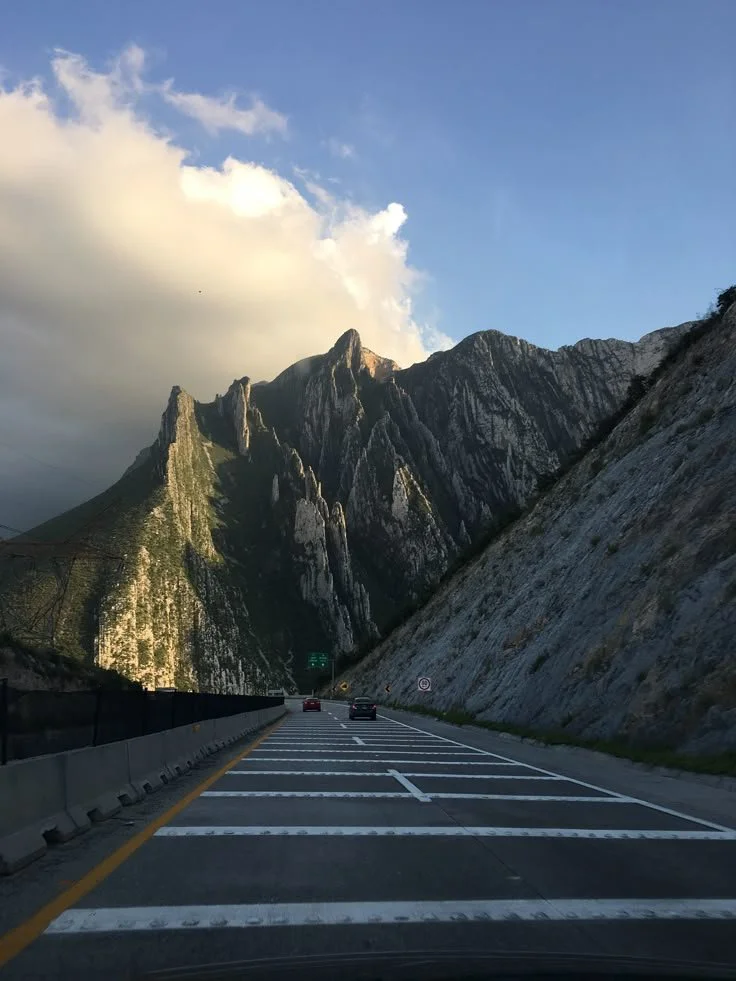
Four years ago I had to choose a city, and the choice looked obvious on paper.
Mexico City was the capital of everything I admired: the galleries, the restaurants, the conversation, the sense that culture there is not decoration but currency. Every creative instinct I had pointed toward it. And yet I chose Monterrey.
I chose it because, in my opinion, it offered more room to grow. Mexico City has an extraordinary culture and art scene, and the value it places on both is a genuine advantage for creative fields. It also has very high competition. Monterrey was growing, and it had something I recognized immediately: a great need and appreciation for beauty, and an equal appetite for speed and enhanced performance. There was a real need for what B0LD does. I was not sure I would find that need in CDMX, at least not unclaimed. Monterrey's business culture also sits a little closer to the American and Canadian cultures I came from, which interested me.
My first Mexican client arrived within my first months. I had become close friends with a business owner who decided to give me a chance. It still took a solid two years to build real trust and a real reputation in this market. Both facts matter, and founders tend to hear only the first one.
This article compares Monterrey vs. Mexico City for business the way most guides do not: as brand markets. Industrial parks, wages and logistics deserve the attention they get. But if you are landing a brand rather than a warehouse, the question is not only where your costs are lowest. It is where your argument will be believed first.
Monterrey vs. Mexico City for business: start with what the numbers say
The data is a useful first filter, as long as you read it honestly.
According to Secretaría de Economía figures reported by Mexico Industry, Mexico received a record US$40,871 million in foreign direct investment in 2025. Mexico City captured US$22,381 million of it, or 54.8% of the national total. Nuevo León, the state whose capital is Monterrey, ranked second with US$3,628 million, or 8.9%, a 72.9% increase over the previous year.
Read that gap carefully before you conclude anything. Mexico News Daily, describing where companies nearshore in Mexico, notes that Mexico City is not an industrial city but is the preferred location for the headquarters of companies operating in Mexico's industrial cities. In other words, the capital is where corporate decisions are often registered and made; the north is often where things are built. The same article lists automotive, electrical, electronics, construction and supply chain as the industries using the most real estate in Nuevo León.
A few more verified coordinates for your map:
Scale. Nuevo León had 5,784,442 inhabitants in the 2020 census, according to INEGI. The Federal Reserve Bank of Dallas describes Monterrey as Mexico's second-largest city.
Proximity. Monterrey sits roughly 217 km from Laredo, Texas, by the route freight operators quote. Laredo, in turn, handled about US$354 billion in trade in 2025 and remains the top US land port of entry, according to Laredo city officials reported by KGNS.
Corporate roots. Monterrey is a headquarters city in its own right: FEMSA, for example, lists its corporate offices in Monterrey, with a second corporate office in Mexico City.
So the honest summary for tech and manufacturing HQs is this: Mexico City concentrates headquarters, capital and national visibility; Monterrey concentrates industrial momentum and a direct line to Texas. Neither fact tells you where your brand should land. That requires a different kind of reading.
What Mexico City offers a brand
Mexico City is a cultural capital in the full sense. In February 2026, The Art Newspaper described Zona Maco, held at Centro Banamex, as the largest art and design fair in Latin America, with more than 220 galleries from 26 countries. That is not trivia for a brand strategist. It tells you the city's buyers have been trained, for years, to read design as a language.
What that means in practice:
A brand can be more conceptual. CDMX audiences will often meet you halfway on an idea. Restraint, irony, references and art direction are read, not merely seen.
The register leans international. In my experience, Mexico City is hipper and, in some ways, more "European." Branding there can lean toward a global vocabulary and still feel native.
The room is full. That cultural sophistication attracts everyone. Local studios, international agencies, Latin American brands, global flagships. You are not competing with your category. You are competing with the city's attention.
For creative, cultural and lifestyle brands with national ambitions, that crowded room can be exactly the point. Being chosen there means something. But arriving there without a sharp, defensible position is expensive, because the city has already seen your mood board.
What Monterrey offers a brand
Monterrey is a different proposition, and outsiders often misread it in both directions.
The backdrop is more traditional and more conservative. Monterrey likes what it likes, and it is loyal to it. It is also open, young and fun, with its own quirks, and that combination confuses people who expect either a business town or a party town. It is both, on its own terms.
What I see here, every week, is a market that values beauty and performance at the same time. Regios want things to look exceptional and work quickly. They appreciate excellence and they notice when it is missing. For a brand that sells refinement with results, that is an unusually receptive audience.
There is also the northern proximity, which is cultural as much as geographic. Texas Monthly, reporting on a Laredo-based taco chain opening in the Monterrey area, quoted a local journalist describing Monterrey as already very "Texanized," and noted shared reference points such as H-E-B, barbecue and Whataburger. That closeness is one reason a US or Canadian founder may find Monterrey's business rhythm more legible than the capital's.
And it is worth noticing who is choosing it. When Chipotle opened its first restaurant in Mexico in July 2026, it opened in San Pedro Garza García, in the Monterrey metropolitan area, with its partner Alsea. Nation's Restaurant News reported that the company called that first location a proof of concept, with more Nuevo León openings expected and Mexico City targeted for 2027. Whatever you think of burritos, the sequence is instructive: test where the argument is most believable, learn, then go to the capital.
It's not about the brand, it's about the branding
I say this to clients often: it's not about the brand, it's about the branding, and which branding belongs where.
The same company can be right for both cities. Its expression rarely is. Here is how I would brief the difference.
Mexico City (CDMX) Monterrey (and San Pedro) Business role Preferred headquarters location; 54.8% of 2025 FDI (Secretaría de Economía, via Mexico Industry) Industrial momentum; Nuevo León second in 2025 FDI, up 72.9% (same source) Cultural register (my reading) Hip, artistic, more "European" Traditional backdrop, conservative, loyal to what it likes; young and fun Branding that tends to land International, conceptual, art-directed Refined, polished, performance-led, quietly confident Competition (my reading) Very high, across every creative category A real, less crowded need for brand strategy; rising Proximity to the US Flights Road, rail and culture: about 217 km to Laredo Best for Cultural, creative and lifestyle brands seeking national stature Premium, wellness, hospitality and B2B brands that sell excellence with results The positioning risk Arriving undifferentiated into a saturated room Assuming "northern" means "American"
When we built Espina, a taquería brand world here in Monterrey, the website line read: "Celebramos la esencia regia en la parrilla." We celebrate the regio essence on the grill. That line belongs to this city. In Mexico City, a different sentence would have been right, written from inside a different identity. Same category, same quality bar, different branding.
The San Pedro bubble, and the Mexico that will not fit in one city
A warning I give every founder who lands in San Pedro Garza García: it is a bubble.
San Pedro is beautiful, affluent and fast, and it can give a foreign brand a flattering first reading of Mexico. But Mexico is far too wide and diverse to be reduced to one market, or two. Monterrey is not Guadalajara, Mexico City is not Mérida, and the Mexico your customers live in may not resemble the one in your pitch deck.
The practical consequence is that choosing a city is a beachhead decision, not a national strategy. You are choosing where to learn first. If you want the longer method for that decision, our playbook on taking a Canadian brand to the US and Mexico covers the full sequence, and the Canada, Texas and Monterrey brand playbook shows how one beachhead can connect three markets.
How to choose where to land: a five-question test
Before you sign a lease in either city, answer these five questions in writing.
What does your brand sell, beneath the product? If the honest answer is cultural credibility, creative authority or taste-making, CDMX deserves serious weight. If it is excellence, speed, performance or refinement with results, Monterrey deserves serious weight.
Where will your argument be believed fastest? Not where it is admired: where it is believed, by people who pay. Make a shortlist of ten buyers you could realistically reach in each city.
How much competition can your budget survive? A crowded room is not a reason to stay away. It is a reason to arrive with a sharper position and more runway.
Who will sit beside you? You need people who read the city's unsaid rules. A local partner, a native strategist, a lawyer who knows naming and registration. Without them, the city stays opaque no matter how good your product is.
What will you test before you commit? My most repeated sentence to clients is "Let me fact-check this and test it in the market first." A small pilot campaign in each candidate city, run directly or tested within B0LD's own accounts, costs a fraction of a wrong launch.
If you want a structured version of this, The Beachhead Method turns these questions into scored worksheets.
Relationship before rollout
Whichever city you choose, the rules of trust apply before the rules of marketing.
My working thesis after years across three markets: Americans talk numbers. Canadians talk timeline. Mexicans talk relationship. Everyone wants to make money; that is reality. But the path to the money differs. In a first meeting, Americans often want to review the data in the first five minutes. Mexicans usually want small talk first: your children, your family, the things that tell them they can trust you. That is normal, and foreign founders miss it constantly.
A few patterns I see in both Monterrey and Mexico City:
Introductions are currency. Asking "who do you know?" is not name-dropping here. It is how people connect. Some are reluctant to share their network, but through people you meet the right people.
The table is the office. Business happens over lunch and dinner, and in coffee shops too. Budget for the time, not only the bill.
Access can be surprisingly direct. In Mexico you can often reach senior decision-makers faster than you would expect, if you truly have a solution to their problem. Given how far apart social and economic levels can be, that openness is striking.
Negotiation is expected. People look to negotiate. Price your proposals with that in mind rather than treating it as disrespect.
My business partner, who is Mexican, taught me to slow down. I am often complimented here for being "so transparent, so open, so forward," and it is appreciated, but I sometimes want to move faster than the Mexican market moves. Two years to real trust is not a failure of execution. It is the timeline. The foreign brands that skip it tend to make the same handful of mistakes, which I unpack in the cross-border branding trap.
For the women choosing where to plant a brand
If you are a woman founder weighing these two cities, here is what I would want someone to tell me.
Choose the city where your brand can be itself, not the one that flatters your ambition. A capital is seductive. So is a fast-growing city that seems to be waiting for you. Neither is the right answer by default.
Gender roles shape how a brand is perceived and how it performs, in every market I work in, and they show up in small decisions: who gets addressed first in the meeting, which colours read as serious, which tone reads as warm and which as unserious. Notice them without shrinking to fit them. Your directness may need pacing. It does not need apologizing for.
And protect your energy like inventory. A beachhead you can actually tend, with people you trust beside you, will do more for your brand than a flag planted in a city you only visit.
Where to go from here
B0LD is a bilingual boutique brand-positioning agency based in Monterrey, working across Canada, the United States and Mexico in English, Spanish and French. We call ourselves a cultural intelligence agency disguised as a marketing firm, and choosing a beachhead is where that description earns its keep. If you are still comparing partners for this kind of work, our guide to choosing a brand strategy firm sets out what to look for.
Deciding between cities? Start with The Beachhead Method, B0LD's market-entry positioning workbook.
Ready to pressure-test your positioning before you land? Book the Strategic Positioning Audit, a senior-led diagnostic of whether your brand's argument will travel, and how.
Explore the agency at b0ld.ca, and think it through with other founders in the B0LD Skool community.
The right city is the one where your brand can be believed first. Everything else is sequencing.
FAQ
Is Monterrey or Mexico City better for business? It depends on what your brand sells. Mexico City concentrates headquarters, culture and national visibility, with very high competition. Monterrey offers industrial momentum, proximity to Texas and a business culture somewhat closer to US and Canadian habits. Test both with a small pilot before committing.
Why does Mexico City receive so much more foreign investment than Nuevo León? Secretaría de Economía figures put Mexico City at 54.8% of 2025 FDI and Nuevo León at 8.9%. Mexico News Daily notes that Mexico City is the preferred headquarters location for companies operating in Mexico's industrial cities, so the capital's share partly reflects where corporate decisions are based.
Should my branding be different in Monterrey and Mexico City? Usually, yes. In my experience, CDMX rewards an international, conceptual register, while Monterrey rewards refined, performance-led branding that respects local tastes. Keep the core identity fixed and flex the expression.
How long does it take to build trust in the Mexican market? Longer than most founders plan for. My first client came within months, through a friendship, but building real trust and reputation took a solid two years. Relationships, introductions and consistent presence matter more than campaign volume.
Do I need a local partner to launch a brand in Mexico? I strongly recommend one. Much of Mexican business communication lives between the lines, and integrating someone from the culture into your team helps you read what is not said. Naming and trademark registration also require a Mexican lawyer.
Sources
Mexico Industry, "México rompe récord histórico de inversión extranjera directa en 2025" (Secretaría de Economía data): https://mexicoindustry.com/noticia/mexico-rompe-record-historico-de-inversion-extranjera-directa-en-2025
Mexico News Daily, "Where are companies choosing to nearshore in Mexico?" (Apr. 11, 2024): https://mexiconewsdaily.com/mexico-living/real-estate/where-are-companies-choosing-to-nearshore-in-mexico/
INEGI, Censo de Población y Vivienda 2020, Nuevo León results: https://www.inegi.org.mx/contenidos/saladeprensa/boletines/2021/EstSociodemo/ResultCenso2020_NL.pdf
Federal Reserve Bank of Dallas, "Mexican residents favor local retailers over cross-border shopping in Texas" (Jan. 16, 2026): https://www.dallasfed.org/research/swe/2026/swe2602
Control Terrestre, Monterrey–Laredo route (about 217 km): https://controlterrestre.com/en/transport/monterrey-to-laredo
KGNS, "Laredo drops to No. 3 overall port but remains top U.S. land port, city officials say" (Feb. 26, 2026): https://www.kgns.tv/2026/02/26/laredo-drops-no-3-overall-port-remains-top-us-land-port-city-officials-say/
FEMSA, Annual Report contact information (corporate offices in Monterrey and Mexico City): https://www.annualreport.femsa.com/2016/contact.html
The Art Newspaper, Zona Maco 2026 preview (Feb. 2, 2026): https://theartnewspaper.com/2026/02/02/zona-maco-art-fair-mexico-city-2026-preview
Texas Monthly, "Taco Palenque in Mexico": https://www.texasmonthly.com/food/taco-palenque-mexico/
Nation's Restaurant News, "Chipotle makes its debut in Mexico" (July 14, 2026): https://www.nrn.com/fast-casual/chipotle-makes-its-debut-in-mexico