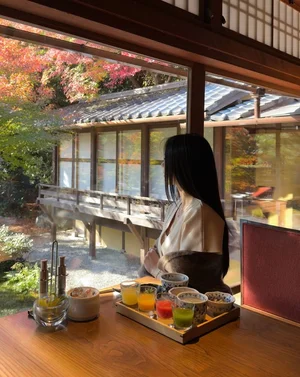
Editorial Series | Founder Notes | The Art of Staying Inspired
description: Inspiration isn't luck. It's attention, inputs and rhythm. Twelve rituals for staying inspired and motivated, from noticing synchronicities to creating more than you consume. By Aja Marie, founder of B0LD.
Target keyword: how to stay inspired and motivated · Secondary: how to feel inspired again, stay motivated as an entrepreneur, creative inspiration tips, create more than you consume, signs from the universe
To stay inspired and motivated, manage three things: your attention, your inputs and your rhythm. Notice the synchronicities and small details around you. Meditate so there's room to notice. Follow only creators who make you want to make something. Create more than you consume. Change your routine before it goes stale. Inspiration isn't something that happens to you. It's what an environment you designed on purpose produces.
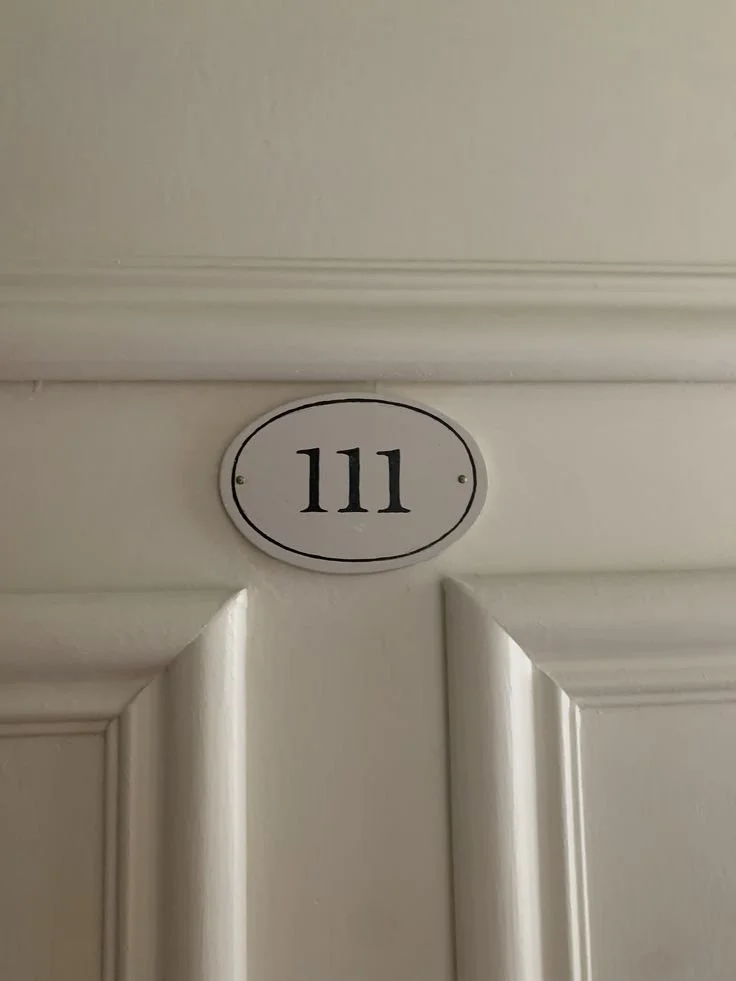
There's a photograph pinned to my mood board: a cream door, classic moulding, and a small oval plaque with a thin black border that reads 111.
I saved it because I've learned to stop when a number keeps showing up. Maybe you know the feeling: 11:11 on the clock, the same name three times in a week, a song that seems to answer the question you asked in the shower. I don't need a door to talk to me. What I've noticed is that the moment you stop to ask why am I seeing this?, you're already paying a quality of attention most people never give their own lives.
That's where this essay starts. Not with hustle, a quote card or advice to "find your why." It starts with attention, because every inspired stretch of my life, as a playwright, as a founder, as a woman building a brand across three countries and two languages, began with noticing, not with effort.
Most advice about staying motivated is written as if motivation were a fuel tank: fill it with quotes and podcasts, burn it until it's empty, and repeat. I've never found that true. Inspiration, in my experience, is much closer to a garden than to a tank. It grows where the conditions are right, dies where they aren't, and responds to the environment far more than to willpower.
So these are my conditions: twelve rituals that keep me inspired and moving. Six are the ones I've lived by for years. The rest are the ones that quietly hold those six together.
First: inspiration and motivation aren't the same thing
Let me separate them, because mixing them up is why most people lose both.
Inspiration is input. It's the spark, the idea or image that makes you want to create. It arrives through your senses: something you saw, read, heard or noticed.
Motivation is momentum. It's the energy to act on the spark, and here's the part almost nobody tells you: motivation mostly follows action rather than preceding it. Psychologists who study behavioral activation have seen the pattern for decades. Waiting to feel motivated before moving is backwards. You move, and the feeling catches up.
So the system is simple. Protect your inputs so inspiration keeps arriving, and build rhythms so action happens whether or not you feel like it. Everything below belongs to one of those two jobs.
Part I — Attention: where inspiration comes from
1. Notice the synchronicities
Carl Jung coined the word synchronicity for meaningful coincidences, moments when the outer world seems to answer an inner question. You think of someone and they write. You're deciding whether to pitch a client and their name appears in a magazine the next morning. The clock says 11:11 again.
You can believe these are messages. You can believe they're your brain finding patterns. For inspiration it doesn't matter, because either way the effect is the same. Synchronicities train you to pay attention, and attention is the raw material of everything creative.
The mind finds what it's been told to look for. When you start noticing synchronicities, you're really training yourself to scan your life for meaning instead of threat. That changes how a whole day feels.
The ritual: Keep a small page in your notebook titled "signs." Write down every coincidence that makes you pause: the number, the name, the song, the stranger's sentence. Don't analyze them. Just collect. After a month, read the page back. You'll be surprised how much your life has been talking to you.
2. Come back to the details and the essentials
When I lose inspiration, it's almost always because I've been living too wide: too many tabs, projects, opinions and screens. The fix is always to come back down to the details.
The weight of a good pen. The way morning light hits a wall. The texture of a wool sweater against a leather-bound notebook. The ritual of a gold watch you put on before the day starts. None of this is frivolous. Details are where taste lives, and taste is what separates work that is made from work that is merely produced.
The essentials matter just as much. When everything feels heavy, ask what the three things are that actually matter this week. Usually it's the body, one piece of meaningful work and the people you love. Everything else is decoration.
The ritual: Once a day, describe one detail in writing, in a single sentence, as precisely as you can. Not "the coffee was good" but "the crema had the color of a lion's back." This is how writers train their eyes, and it works just as well for founders.
3. Meditate, even badly
I'm not going to pretend meditation is glamorous. Most days mine is ten minutes of gently dragging my mind back from a client email. That's the point, though. Meditation isn't about emptying the mind. It's about practicing the return. Every time you notice you've drifted and come back, you're strengthening the exact muscle that lets you notice synchronicities, see details and stay with an idea long enough for it to become something.
A mind that never gets quiet can't hear its own ideas. Inspiration often arrives in the space between thoughts, and meditation is how you make that space on purpose.
The ritual: Ten minutes, same time every day, before the phone. Sit, breathe and count to ten, then start again. When you lose count, which you will, begin at one without judgment. That's the whole practice.
Part II — Inputs: what you let in
4. Only follow creators who inspire you
This one is non-negotiable for me, and I hold to it with an almost ruthless discipline.
Everything you consume becomes raw material for what you create. If your feed is full of people who make you feel behind, anxious, envious or small, you aren't resting when you scroll. You're marinating in comparison. And comparison doesn't produce inspiration. It produces imitation or paralysis.
I follow people who make me want to make something: designers, writers, founders with real taste, women who build with elegance, accounts that feel like a museum rather than a marketplace. Everyone else gets muted, quietly and without guilt.
The ritual: Scroll your following list tonight. For each account, ask one question: Does this make me want to create, or does it make me want to compare? Unfollow or mute everything in the second category. It's the fastest inspiration upgrade you'll ever make, and it costs nothing.
5. Create more than you consume
This is the rule that changed my life more than any other.
Most people consume ten hours for every one hour they create. Inspiration dies in that ratio, because consuming feels like input without ever becoming output. You end the day full of other people's ideas and empty of your own.
Flip the ratio, even slightly, and something shifts. Creating, whether that's writing, sketching, building or recording, produces its own inspiration. One finished idea generates the next. Creativity compounds. Consumption doesn't.
It's also why I deleted Netflix. I have nothing against stories, since I've spent my life writing them. I just noticed my evenings were all intake and no expression.
The ritual: Before you open any app in the morning, make one thing. It can be a paragraph, a sketch, a voice note, a post draft or a single strong sentence. Create first and consume second, every day.
6. Read old things
When everyone reads the same new things, everyone has the same ideas. The most original thinking I've done came from old sources: vintage magazines, out-of-print design books, Jung, Beauvoir, letters written a century ago, the archives of brands that were building identity before "branding" was a word.
Old things carry a different frequency. They haven't been flattened by algorithms, and they give you references no one else in your feed is using. That's where differentiation comes from, in content and in business.
The ritual: Keep one physical book on your desk that's at least fifty years old. Read five pages before you plan anything.
7. Walk without headphones
My most important creative meeting of the day is with my dog. It's our walk, no headphones, no podcast, just the street and whatever my mind wants to say when it isn't being fed.
We fill every silence now, on every commute, walk and moment in line. But the brain needs unstructured time to connect ideas, and walking in particular seems to loosen thinking in a way sitting never does. Many of my best strategic ideas for clients have arrived somewhere in the middle of that walk.
The ritual: At least one walk a day in silence. Bring your phone only to write down what arrives.
Part III — Rhythm: how inspiration turns into momentum
8. Change your routine into something better
Routine is good until it isn't. The same routine that once gave you structure can quietly turn into a cage, and when every day looks identical, your brain stops paying attention to it. Novelty is one of the strongest triggers of attention and dopamine we know of.
So when inspiration flattens, I don't try harder. I change the shape of my days, and not randomly: into something better. I move my training earlier. I switch where I write. I add a morning ritual, like Hungarian practice, or remove an evening one, like the television. I rebuild my week around what the season asks for.
The key word is better. You're not changing for the sake of change. You're upgrading. Every routine change should answer this: What would the most elegant version of my day look like?
The ritual: On the first of each month, choose one routine to upgrade: one habit added, removed or improved. Keep it for thirty days before judging it.
9. Move before you feel like it
This is the behavioral science from the beginning, applied. On days when nothing inspires me, I don't sit and wait. I train: Pilates, strength, a hike. Movement shifts your mood, your energy and your thinking, and it proves to your nervous system that you're someone who acts.
Most of my stuck days end the same way: I moved first, and the ideas followed about an hour later.
The ritual: When you feel stuck, set a timer for twenty minutes and move. Walk, stretch or lift. Don't negotiate. Decide afterwards whether you still feel stuck. You usually won't.
10. Take yourself on an artist date
Julia Cameron, in The Artist's Way, prescribes a weekly "artist date": a solo outing whose only purpose is to delight and feed your creative self. It could be a gallery, a flower market, a bookshop, a new neighborhood or a hotel lobby with good light.
It sounds indulgent. It isn't. It's the creative equivalent of restocking a pantry. You can't cook forever from an empty kitchen.
The ritual: Two hours a week, alone, somewhere beautiful, with no productivity agenda. Put it in your calendar like a client meeting, because it is one, with your future self.
11. Keep a spark notebook
Ideas are shy. If you don't catch them, they leave. I keep a notebook, a physical one, for everything that sparks something: a phrase from a conversation, a color in a shop window, a campaign concept that arrives in the shower, a line from a book, a synchronicity.
Physical matters here. Writing by hand slows you down enough to actually think about what you're writing, and a notebook doesn't have notifications.
The ritual: One notebook, always in your bag. On Sundays, read the week's entries and circle the three that still excite you. Those are next week's projects.
12. Finish one small thing
Nothing kills inspiration like a pile of beautiful unfinished things. Every open loop quietly drains attention, and every finished thing, however small, gives a jolt of completion that feeds the next spark.
When I feel scattered, I don't start something new. I finish something small: an email, a caption, the last paragraph of an essay, one slide. Momentum is built from completions, not intentions.
The ritual: Before you start anything new, finish one small thing already in progress. Then celebrate it, genuinely, even if it's only a sentence.
The quiet truth about inspiration
The women I admire most, the founders, artists and quietly formidable operators, aren't more inspired than everyone else by nature. They've simply built lives where inspiration has room to arrive. They protect their attention like capital, curate their inputs like a collection, and treat their routines as design problems rather than obligations.
Simone Weil wrote that attention is the rarest and purest form of generosity. I'd add that it's also the rarest and purest form of ambition. Everything you want to build starts with what you're willing to notice.
So notice the 111s. Come back to the weight of the pen. Mute the accounts that make you small. Make something before you consume anything. Move before you feel ready.
And the next time you're waiting to feel inspired, remember that it isn't waiting for you somewhere else. It's waiting in the details you've been too busy to see.
When inspiration needs a direction
Inspiration without structure is just a beautiful mood. If your ideas keep arriving but your brand doesn't know where to put them, the problem isn't creativity. It's positioning.
Feminine Flow in Business ($36): the rhythm system I use to turn inspiration into output without burning out, including energy mapping, weekly shapes and routines built for women who create. Get it here.
Positioning Sprint in a Box ($36): for when you have a hundred ideas and no single sharp message. It gives your inspiration a spine. Get it here.
The B0LD Skool community: a room full of women building beautiful, intentional businesses, where we share what's inspiring us and hold each other to creating more than we consume. Join us.
More essays and strategy: b0ld.ca
FAQ
How do I stay inspired and motivated every day? Protect three things: your attention (meditate and notice details), your inputs (follow only creators who inspire you and create more than you consume) and your rhythm (move before you feel motivated and upgrade your routine regularly). Inspiration comes from environment, not willpower.
What's the difference between inspiration and motivation? Inspiration is input, the spark or idea that makes you want to create. Motivation is momentum, the energy to act. Motivation usually follows action rather than preceding it, so start moving and the feeling catches up.
How do I feel inspired again when I'm in a creative rut? Change your inputs and your routine. Unfollow accounts that trigger comparison, read something old, take a walk without headphones, go on a solo "artist date" and finish one small thing to rebuild momentum.
What does "create more than you consume" mean? Spend more of your time producing your own ideas, through writing, designing, building or recording, than absorbing other people's. A simple start is to make one thing each morning before opening any app.
Are synchronicities real signs? Carl Jung described synchronicities as meaningful coincidences. Whether you read them as signs or as your mind finding patterns, noticing them trains attention, which is the raw material of creativity.