How to Build a Brand World Customers Want to Belong To
Editorial Series | Brand Strategy | Your Brand Is a World
description: A brand isn't one campaign or one perfect idea. It's a world. Here is how to build a brand world, detail by detail, that customers want to belong to.
Target keyword: brand world, how to build a brand world
Secondary keywords: brand universe, brand experience, immersive branding, brand worldbuilding, brand identity system, brand community
Your Brand Isn't a Campaign. It's a World.
A brand world is the complete, coherent environment a brand creates around its customer: the name, the objects, the textures, the language, the rituals and the people, all expressing one idea. You build a brand world by defining a single core tension, then translating it into every touchpoint until each detail confirms the others. Customers don't buy into a campaign; they buy into the world, and into who they become by belonging to it.
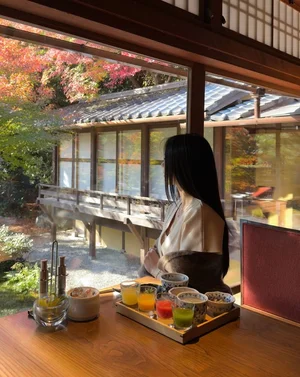
Picture a table in Monterrey. The napkin in your lap is midnight navy, and when you lift it you notice the embroidery before you notice you've noticed it. The menu is heavy, textured, debossed, so that your thumb reads it a half-second before your eyes do. The server's collar is rounded, his knit tie a little old-fashioned in a way that feels deliberate rather than dated. On the wall, a small oval seal: two ribs, three eight-pointed stars. Later, on the website, one line: Celebramos la esencia regia en la parrilla.
The place is called Espina. In Spanish, espina means thorn, and it also means backbone. The symbol is drawn from a cactus spine which, seen up close, looks like a star.
You will not find Espina on a map. It is a world B0LD built for a restaurant client, one of three complete worlds we wrote for the same space. The client chose another of the three, which is exactly how it should work. Espina lives in our portfolio as Hors série: alternate ending, and I keep returning to it because it is the clearest proof I have of the argument in this essay: nobody at that table would remember a tagline. They would remember how the place made them feel, and they would not be able to tell you which detail did it, because all of them did.
The myth of the one perfect idea
Most founders come to brand strategy carrying a quiet fantasy. Somewhere out there is the idea: the line, the logo, the campaign that will finally make the market understand. It is a romantic belief, and it is understandable, because the culture sells it constantly. We tell the story of famous brands as if they were born in a single meeting, a single slogan scrawled on a napkin, a single launch that changed everything.
That is rarely how it works. It is not one line of branding that creates a brand, and it is not one campaign that creates the success. A campaign is a weather event. It arrives, it is felt, it passes. What remains when the campaign is over is the climate, and the climate is the brand.
The perfect-idea fantasy is also expensive. It sends founders hunting for a hero moment while the everyday touchpoints, the invoice template, the packaging tape, the welcome email, the way the phone is answered, quietly contradict everything the hero moment claimed. A brilliant campaign pointed at an incoherent brand is a beautiful invitation to a house that has no furniture. People arrive, look around, and leave.
What actually builds a brand is accumulation. Hundreds of small decisions, each one aligned, each one confirming the others, until the customer feels something they cannot fully articulate and do not need to. That accumulation has a name. It is a world.
What a brand world actually is
A brand world, sometimes called a brand universe, is the full sensory and symbolic environment a brand creates. It includes the visual identity, but it is not the visual identity. It includes the voice, but it is not the voice. It is the logic underneath all of them: the reason the napkin is navy and not white, the reason the menu is textured and not glossy, the reason the website speaks Spanish with a regional accent and not a neutral one.
The difference between a brand identity and a brand world is the difference between a costume and a character. A costume is worn. A character has a history, opinions, habits, a way of entering a room. You can describe a costume completely with a list of items. You can only describe a character by understanding what they want.
Three features separate a true brand world from a well-designed brand:
It has an internal logic. Every choice can be traced back to one core idea. At Espina, the idea is the double meaning in the name: thorn and backbone, the sharpness and the spine of the city. The cactus spine that becomes a star is that idea made visible. The navy-and-saddle-brown palette is that idea made tactile.
It is felt before it is understood. The best brand worlds work on the body first. Texture, weight, temperature, sound, the drag of paper under a thumb. Understanding comes later, if it comes at all. The customer does not need to decode the world for it to work on them.
It has room for the customer. A world is somewhere you can stand. A campaign speaks to you; a world makes space for you inside it. This is the part most brands miss, and it is the part that matters most.
Why customers now expect immersive branding
None of this is new as theory. In 1998, Joseph Pine and James Gilmore published "Welcome to the Experience Economy" in the Harvard Business Review, arguing that experiences had become a distinct economic offering, the next step after commodities, goods and services. What is new is that customers now expect it from almost everything they buy, not only from theme parks and luxury hotels.
The data has followed the instinct. In PwC's Experience Is Everything survey of 15,000 consumers, 73% said a good experience is key to their brand loyalty, and customers indicated they would pay a premium of up to 16% for a better one. Price and quality still lead the decision. But experience is what decides whether the decision is repeated.
Look at how the brands with the strongest worlds behave. Aesop does not roll out a standard store design. Each shop is built to respond to its specific location, often with local architects and designers; the company's retail architectural lead has described the framework as "a single strong idea, a sense of place" (as reported by Options, The Edge Singapore). The result is that walking into an Aesop store in a new city feels both entirely familiar and entirely particular, which is precisely the feeling of entering a world rather than a chain.
Le Labo goes further, turning the purchase itself into a ritual. Its fragrances are made to order in the boutique, and each bottle carries a personalised label marked with the date and place it was formulated and a message the client chooses, according to FashionNetwork. The label is not packaging. It is a souvenir of a moment, and it quietly tells you that you were there.
Neither brand is relying on a campaign. Both are relying on detail, repeated with discipline until the detail becomes the message.
They are buying who they'll become
Here is the deeper reason brand worlds outperform campaigns, and it is psychological rather than aesthetic.
People are not only buying a product. They are buying into an identity, a version of themselves they want to step into, and they are buying into the people who already live there. Every purchase in a well-built brand world is a small vote for a future self. The woman who buys the fragrance compounded in front of her is not only buying a scent. She is becoming someone who has a scent made for her. The diner at Espina is not only buying grilled meat. He is becoming someone who knows where the real esencia regia is served.
Jung would call this a symbolic act, and he would be right. Brands that understand it stop asking "what are we selling?" and start asking "who does our customer get to be here?" The first question produces features. The second produces belonging.
And belonging, once offered, is self-reinforcing. A community forms around the world, and the community becomes part of the world. New customers are no longer only buying your product. They are buying access to the people who already chose it. That is when a brand stops needing to shout, because the world is doing the talking, and the people inside it are doing the inviting.
This is also why brand worlds are so difficult to copy. A competitor can copy a campaign in a week. Copying a world means copying a hundred decisions, their logic, and the community that has grown inside them. By the time they've finished, the world has moved.
How to build a brand world, detail by detail
At B0LD, we quite literally sell clients their own world, built from their vision. Not a logo package. Not a campaign calendar. A complete environment they can step into, test, and inhabit before a single napkin is ordered. The Espina world shows the anatomy, so let me walk through how it was assembled, because the order matters more than most people realise.
1. Begin with mood, not with logo. Espina started as a moodboard of nine images. Nine is deliberate: enough to establish a feeling, too few to hide a contradiction. If one image fights the others, you see it immediately. Before you design anything, find your nine and remove every image that is merely beautiful rather than true.
2. Find the name that carries a tension. Espina holds two meanings at once: thorn and backbone. That tension is the engine of the whole world. A name with a single meaning describes. A name with a productive double meaning gives every future decision a direction. If your brand name cannot carry tension, your positioning statement must.
3. Let the hand show. Espina's wordmark is drawn in pencil. In a market saturated with perfectly kerned digital logos, a pencil-drawn mark signals that a human made a choice here. It is the visual equivalent of a handwritten note, and it is a deliberate counterweight to the precision elsewhere in the world.
4. Build a palette you can touch. Linen, midnight navy, saddle brown. These are not colours chosen from a screen; they are materials. Linen is a fabric, saddle brown is leather. When your palette is named after things, it translates naturally into objects, which is where a world lives.
5. Make the symbol a discovery. The Espina seal comes from a cactus spine that, up close, looks like a star. The oval seal holds two ribs and three eight-pointed stars. The best symbols reward the second look. They tell the customer there is more here than they saw at first, which is the promise every world should make.
6. Dress the world. Embroidered navy napkins. A debossed, textured menu. Rounded collars and knit ties for the staff. This is where most brands stop investing, and it is exactly where customers start noticing. The uniform is the brand worn by a human being. The napkin is the brand held in a customer's hand.
7. Give the world one sentence. Celebramos la esencia regia en la parrilla. Not a list of values. Not a mission paragraph. One sentence, in the language of the place, that a guest could repeat to a friend. If your world needs a paragraph to explain itself, the world isn't finished.
Notice what is missing from that list: a campaign. Espina was designed so that any campaign it ever ran would simply be a window into a world that already existed.
A note for smaller brands
Brand worldbuilding is not reserved for companies with a flagship store and an architecture budget. A solo founder's world can live in her invoice design, her email signature, the scent of the packaging, the cadence of her newsletter, the way she names her offers. The scale changes; the discipline does not. In fact, a smaller brand has an advantage: fewer touchpoints, which means fewer opportunities to contradict itself, and a founder who can personally guarantee every detail.
Where brand worlds fail
Brand worlds fail in two predictable ways. The first is the theme park: a world so literal and so overdesigned that the customer feels managed rather than welcomed. The second is the half-built world: a gorgeous storefront paired with a careless checkout, a beautiful Instagram grid paired with a generic customer service script. The second failure is far more common, and far more damaging, because a broken detail does not merely subtract from the world. It makes the customer doubt every other detail.
The test is simple. Walk through every touchpoint as a customer would, in order, and ask one question at each step: does this belong to the same world as everything else? Where the answer is no, you have found your next project. If you want an outside eye on that walk-through, it is precisely what our Strategic Positioning Audit is built to do.
For the women building worlds the market calls "details"
There is a particular dismissal that female founders hear often enough to recognise the tone before the words arrive. The napkin, the paper weight, the ribbon, the scent in the room: these get filed under "the pretty part", as if they were decoration applied after the real strategy was finished.
Allow me to be precise about this. The details are not the decoration. The details are the strategy, delivered at the scale a customer can actually feel. A positioning statement lives in a deck. A brand world lives in a hand, on a tongue, under a thumb. The founders who understand that intuitively, and many women building brands in wellness, beauty, hospitality and luxury understand it intuitively, are not doing something soft. They are doing the hardest part, the part that makes positioning tangible.
The mistake is not caring about details. The mistake is caring about them without a logic, so that each one is lovely and none of them speak to each other. When the details are connected to a core tension, they stop being "your taste" and start being an asset that can be briefed, defended, protected and scaled. That shift, from intuition to architecture, is often what moves a woman's brand from charming to formidable. Your eye was never the problem. It simply needed a spine, which, as it happens, is what espina means.
If you are building alone and want the frameworks that turn instinct into a system, the Feminine Flow in Business guide and the Positioning Sprint in a Box are good places to start.
The world is the strategy
Your brand will run many campaigns in its life. Some will land, some will not, and almost none will be remembered individually. What will be remembered is the world those campaigns were windows into: whether it was coherent, whether it was felt, and whether the customer could find a place for herself inside it.
So stop hunting for the one perfect idea. Start building the place where all your ideas belong.
Where to begin building your brand world
If you suspect your brand is a collection of good decisions that don't yet speak to each other, the Strategic Positioning Audit is where we start. We walk your brand the way a customer does, find the core tension that should be holding it together, and show you where the world is leaking.
If you already know your world and need it translated into material choices, palette, symbol and touchpoints, book a Design Consultation. And if you want to build the whole world with us, from tension to napkin, over three focused months, apply for the 90-Day Brand Positioning Intensive.
To see more of the worlds we build, visit b0ld.ca. And if you want to build alongside founders doing the same work, join us in the B0LD Skool community.
FAQ
What is a brand world? A brand world is the complete environment a brand creates around its customer: visual identity, voice, materials, rituals, spaces and community, all governed by one core idea. Where a brand identity describes how a brand looks, a brand world describes how it feels to be inside it.
How do you build a brand world for a small business? Start with one core tension, the idea your brand holds that no competitor does. Then translate it into a short moodboard, a palette named after materials, a symbol with a second layer of meaning, and one sentence that sums up the world. Apply it to every touchpoint you control, however small, from invoices to packaging.
What is the difference between a brand world and a brand campaign? A campaign is temporary and speaks to the customer. A brand world is permanent and makes room for the customer. Campaigns work best as windows into a world that already exists; without the world, they have nothing to point to.
Why does immersive branding increase loyalty? Because customers are buying an identity as much as a product. In PwC's Experience Is Everything survey, 73% of consumers said a good experience is key to their brand loyalty. A coherent brand experience lets customers feel who they become by belonging, and that feeling is what brings them back.
What is brand worldbuilding at B0LD? At B0LD, we build clients their own world from their vision: the name, the mood, the palette, the symbol, the objects and the language, delivered as a complete environment before production begins. The Espina taquería world, one of three worlds we wrote for a single restaurant, is a public example.