Between the Cowgirl and the Coast: How B0LD Does Business in Summer
Editorial Series | Niche Strategy Deep Dive: "The Feminine Business Owner's Playbook"
The Season We Shed Our Careful Edges
Summer is when the business world gets sloppy – do not get me wrong, it is regardless one of my favourite seasons.
Everyone's calendar fragments. Teams diaspora to cottages and coastlines. The quarterly reviews blur into happy hour conversations. Emails get longer and more defensive because nobody's really reading them. The usual architecture of professional distance dissolves in the heat, and what emerges is either chaos or—if you know how to move—opportunity.
I've been building B0LD across four borders and three time zones for the better part of a decade now, and what I've learned is this: summer reveals who you are when the structures that bind everyone else together start to dissolve. It reveals whether you've built a brand on aesthetics or strategy. It shows whether your positioning is real or performance. And it exposes, with painful clarity, whether you actually give or whether you're just performing generosity while building walls.
I'm writing about my business not as a case study, but as a lived philosophy. I'm writing about what it means to build something that's generous by design, positioned by intention, and visible by choice. And I'm writing about the woman I've had to become to make all of that real.
The Archetype Problem I Solved
There's a particular kind of woman who ends up in my office.
She's built something that matters. A wellness brand, a consulting practice, a boutique service. She's smart—the kind of smart that comes from obsessive reading and pattern recognition. She moves through the world with intention, surrounded by the right people, the right materials, the right scent even. She's styled, not fashionable. She's articulate in ways that make other women pay attention.
And she's terrified.
Terrified that her visibility will cost her something. That being strategic about how she's perceived will make her false. That building a positioned brand around herself means she's narcissistic or calculated or—the word that haunts women in particular—inauthentic.
She's usually arriving from a place of overextension. She's been playing small, playing nice, playing "approachable." She's given away her expertise for years, thinking that generosity would naturally translate to revenue, that the market would simply notice her virtue. Instead, she's built an audience of takers. Her newsletter is full of people who consume her frameworks but hire her competitors. Her social media is populated by women who screenshot her ideas and sell them back to their own clients. Her energy is depleted, her positioning is muddled, and she's wondering if she was ever cut out for this at all.
The conversation usually starts with her saying some version of: "I don't want to be a salesperson. I just want to help people."
And what I've learned to say back is: "Those things are not mutually exclusive. In fact, one requires the other."
What It Means to Give by Design
The most common objection I encounter when positioning a female founder is this fear of commodifying herself—of turning who she is into something that can be bought and sold. It's wrapped in language about authenticity and integrity, but what it really is, underneath all of that, is a fear of power.
In Simone de Beauvoir's The Second Sex, she writes about how women have historically been denied access to a complete selfhood because the world insists on categorising us—as either Madonna or whore, nurturer or ambitious, relatable or aspirational. We've internalised the idea that to be good, we cannot also be strategic. To be generous, we cannot also be profitable. To be feminine, we cannot also be formidable.
BOLD exists because I stopped believing that.
What we've built—what I'm continuously rebuilding, actually, because this is seasonal work—is a model where generosity is not the absence of strategy; it's the foundation of it.
The free content we distribute isn't a loss leader. The frameworks we give away aren't acts of altruism that we're somehow betraying when we charge for the implementation. The writing we publish, the insights we share, the diagnosis we offer to brands we'll never work with—this is not a compromise of our commercial interests. It's their expression of themselves.
Here's why: when you give with strategy, you're actually showing people how you think. You're giving them a glimpse of what it would feel like to work with you. You're teaching them the language you use, the principles you operate from, the kind of problems you solve.
The consultant who posts half-formed advice is being generous in the wrong way. She's being generous with time while being stingy with quality. The woman who positions herself carefully and shares her best thinking openly? She's generous with the things that actually matter.
In summer especially, when everyone's scattered, and attention is fragmented, this distinction becomes crucial. You cannot rely on the consistency of structure anymore. You have to rely on the integrity of what you're putting into the world.
The Three Bodies of a Founder
I've always moved between three distinct personas, though I only recently understood they weren't contradictions—they were coordinates.
The first is the cowgirl.
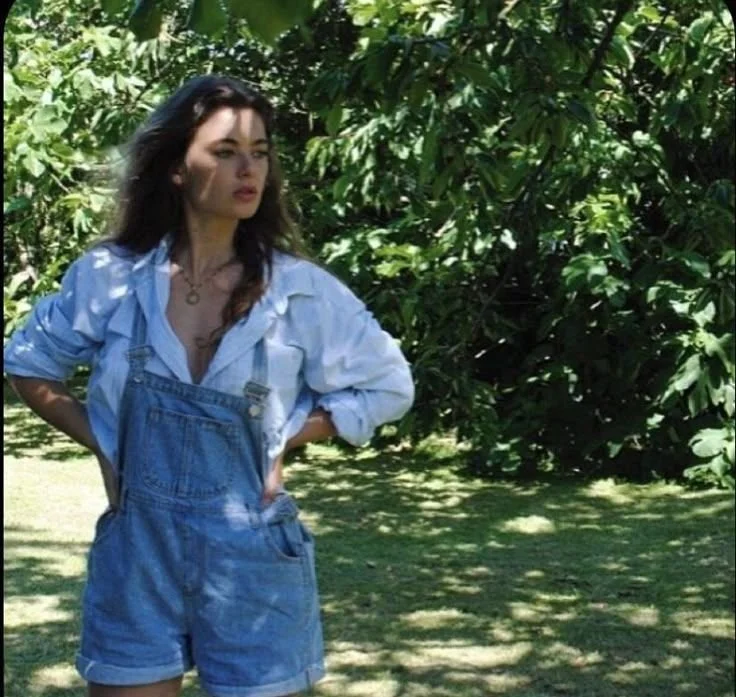
She's the part of me that was raised in a tradesman's household where entropy was the default state and vision was something you executed, not discussed. She's unglamorous, decisive, and allergic to performance. It isn’t her first rodeo. She fixes what's broken without ceremony. She doesn't ask for permission; she finds the problem, engineers the solution, and moves on. The cowgirl doesn't care if you like her. She cares if the work is done. I call her the pragmatist, but her real gift is that she doesn't mistake motion for progress.
I meet her in the morning, when I'm reviewing contracts, analysing client data and figuring out which strategic threads to pull. She's the part of me that knows—viscerally—that business is physics, not feelings.
She grew up in the countryside of a French Canadian province, and she laughs loudly. She rides horses. She plays fight with her brother. She is wild and untamed.
The second is the coastal girl.
She's sophisticated, observant, and builds connections through aesthetic intelligence. She notices the difference between branded goods and actually refined things. She reads the room. She picks the restaurant by how the light hits the table at 6 p.m., not by the menu. She understands that luxury isn't about price; it's about the subtlety of knowing what matters. The coastal girl is relational. She builds culture through shared taste. She moves through institutions (galleries, private clubs, dinner parties) with the kind of ease that suggests she's always belonged there, even when she's new.
I meet her in the afternoon, when I'm with clients or writing articles, when I'm thinking about how a brand should feel, not just what it should do. She's the part of me that knows business is psychology, not just physics.
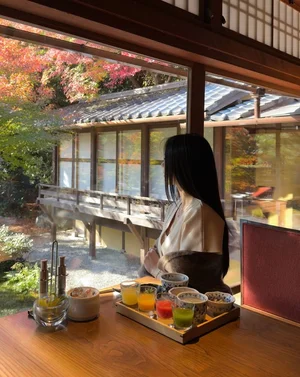
She lived her summers on the East Coast, sipping tea with her grandparents by day, swimming in the open ocean by sunset, refining her perfect accent, dressed in soft cottons and perfectly imperfect. She is an island girl; she grew up on grilled fish and a light breeze from the sea messing up her hair.
The third is the strategist-philosopher-philanthropist in silk.
She's the part that integrated the first two. She's the woman who can move between a mining convention in Vancouver, a design district opening in Mexico City, and a private strategy dinner in a Toronto penthouse—and understand exactly what each space requires. She holds the paradox without collapsing into one side. She's generous with her knowledge while being completely unsentimental about who deserves to access it. She builds systems that work because they're beautiful. She refuses the false choice between integrity and commerce.
This is the woman I've had to become to run B0LD responsibly.
And the synthesis only became possible when I stopped trying to be one thing.
How We Position Generosity
The work we do at B0LD is built on a radical transparency about what's happening in the room.
When a brand comes to us, we tell them the truth immediately: we're not here to make them feel better about themselves. We're here to change how the market experiences them. Those might seem like the same thing, but they're not. One is therapeutic; the other is strategic.
The clients who stay are the ones who understand the difference.
They're the ones who recognise that a rebrand isn't a luxury service—it's a positioning investment. They understand that when we write their narrative or design their systems or consult on their visibility strategy, we're not being generous with our time; we're being intelligent with theirs. We're handing them a map that didn't exist before. We're showing them how to move through their market with intention instead of hope.
What makes this generous—what makes this ethical, actually—is that we do the diagnostic work upfront. We look at the entire landscape: their competition, their customer psychology, their internal culture, their market positioning, the psychology of their founder. We read everything. We ask uncomfortable questions. And then we tell them what they actually need to hear, not what they want to hear.
That's the give. The honesty. The refusal to let them waste another year building the wrong thing.
Summer as a Teaching Season
In Mexico right now, there's a particular kind of heat that makes everything move slower.
The business day restructures itself around it. You start early, you rest deeply at midday, you return to work when the light shifts. It's not a luxury; it's physics. The human body can only absorb so much heat before it requires restoration.
What I've noticed is that this rhythm—the one that seems inefficient to North American sensibilities—actually produces better thinking.
There's space. There's breathing room. There's time for the kind of observation that doesn't fit into a quarterly review. And maybe that's what we're all missing in our rush to make summer "productive" in the traditional sense.
I have barely landed in Quebec, and the freshness of the air oxygenates my brain cells, I find myself changing rhythms like switching codes between my different lives, and I am inspired in a whole new way again. I wañlk the familiar streets of my teenage years and appreciate a whole other aesthetic and way of living, and I think to myself :
This summer, B0LD is doing something different. We're not launching campaigns or dropping new product lines or creating artificial urgency. Instead, we're:
Teaching what we know. Deeply. The frameworks we use, the thinking behind our positioning decisions, and the philosophy that guides how we position female-founded brands. The stuff we usually keep for private client sessions, we're making visible.
Building systems that scale kindness. The Compass (our template library), The Atelier (our monthly consulting), The Edits (our diagnostic service)—these aren't products. They're proof of concept. There are ways of saying: "Here's how you do this yourself. Here's what we think. Here's the map."
Doing the work in public. Writing long-form, unsponsored thinking about positioning, feminine power, market dynamics, and the psychology of visibility. Not for immediate conversion. For study.
What It Means to Be Visible Without Performing
The most common misconception about positioning is that it requires inauthenticity.
It doesn't. It requires clarity.
When I'm visible—when I'm writing, when I'm consulting, when I'm moving through a conference or a boardroom—I'm not performing a version of myself. I'm being extremely, almost uncomfortably honest about who I am and what I think. The difference is that I'm doing it intentionally. I'm choosing what to reveal, to whom, at what time, in what form.
That's not performance. That's power.
A woman who says everything she thinks to everyone she meets is not being authentic; she's being undefended. A woman who is strategic about her visibility is not being false; she's being self-aware.
The confusion happens because we've been taught that women's power comes from being accessible, approachable, and constantly open. We perform generosity through availability. We perform authenticity through oversharing. We perform trustworthiness by eliminating all distance between who we are and who people perceive us to be.
B0LD rejects that model entirely.
We believe that the most generous thing a woman can do is be intelligent about how she shows up. Be clear about what you offer. Be strategic about who gets access. Be intentional about your visibility. And refuse the false choice between being feminine and being formidable.
The Monetization as Philosophy
This is where most conversations about female-founded brands go sideways.
There's this implication that if you charge for your work, if you're strategic about your positioning, if you're intentional about visibility, you're somehow less pure in your purpose. The discourse is saturated with language about "selling out" or "commodifying yourself."
What B0LD teaches is the opposite: that charging appropriately for your work is itself an act of integrity.
When you underprice your expertise, you don't make the market more accessible. You make it untenable. You signal that your knowledge has less value than it actually does. You train the market to devalue you. And you guarantee that only wealthy women can afford to take risks, because everyone else is too exhausted from giving away their energy for free.
This summer, we're pricing our services not based on what feels comfortable, but based on what's fair. For the work, for the client, for the market that's willing to pay for transformation.
And we're teaching our clients to do the same.
That's the monetization philosophy: not "how do we make the most money," but "what is this work worth, and who are the people ready to invest in it?"
The answer to the second question determines everything else.
Where We Go From Here
In four months, I'll be in Toronto, Vancouver, Mexico City, and back to Canada. I'll be writing from hotel rooms and offices and the kitchen of my father’s condo. I'll be advising female founders on their positioning while building my own. I'll be moving between the cowgirl and the coast and the boardroom, wearing Marvis toothpaste and Aesop soap and boots that cost more than most people spend on a handbag, and I will be thinking about one thing continuously: how do we build brands that are generous by design, positioned by intention, and visible by choice?
That's the work. That's what B0LD does.
And this summer, I'm going to write about how we do it.
Not as case studies. As lived philosophy.
Because a brand that doesn't change your thinking isn't worth your time.
What's Coming
Over the next four months, we're releasing a 20-article editorial series:
How to position yourself when everyone else is "relatable"
Why niche is not small; it's sovereignty
The psychology of the female founder who won't stop giving
How to use Jungian archetypes to build unshakeable brand positioning
Cultural intelligence as a positioning weapon
The economics of taste and who gets to profit from it
Why visibility is political and how to own yours
And much more.
These articles are built for study, not scrolling. Save them. Share them. Hire us off the back of reading them if you're ready to actually transform your positioning.
That's the bet.
B0LD is not a marketing agency. B0LD is a positioning weapon.
And summer is when we sharpen it.
Ready to position yourself? Schedule a consultation.
Want to dive deeper first? Explore our template library for DIY positioning strategy.