Why Luxury Is Spiritual: The Sacred of Material Refinement
March, 2026 | Philosophy & Brand Theology
Niche Industry Deep Dive Series | Focus: The Metaphysics of Quality
SEO Keywords: luxury as spiritual practice, mindful luxury, conscious consumption, quality over quantity, spiritual materialism, intentional living, premium brand philosophy
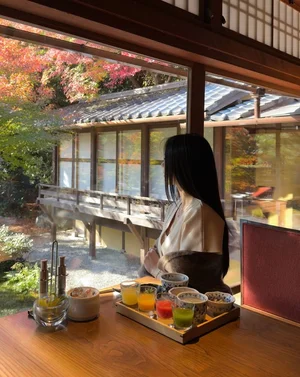
She poured the tea like it was a prayer.
Not quickly. Not carelessly. She heated the Hermès porcelain teapot first—hot water swirled, then discarded. Then the leaves: Mariage Frères Marco Polo, measured precisely. Water at exactly 85°C, poured in a slow spiral. Timer set for three minutes, not a second more.
The cup itself was Astier de Villatte—hand-formed white ceramic, slightly irregular, each one signed by the artisan who made it in their Paris atelier.
She did this every morning.
Not because she needed expensive tea and handmade porcelain.
Because the ritual demanded excellence.
Because pouring tea from a cheap mug while scrolling Instagram is consumption.
But pouring tea from a vessel made by human hands, with leaves cultivated by people who understand terroir, into three minutes of complete presence—
That's devotion.
Most people would call this indulgent. Materialistic. Perhaps even superficial.
They're wrong.
And their wrongness reveals something crucial about why most brands—and most lives—lack the gravity they're searching for.
Let me show you why luxury is not the opposite of spirituality.
Why, in fact, true luxury is one of the most spiritual practices available to us.
And why this matters profoundly for how you build your brand.
I. The False Binary (Or: How We Got This Wrong)
Let's start by dismantling the lie.
The Puritanical Inheritance
Western culture has spent centuries teaching you that material refinement and spiritual depth are incompatible.
That if you care about beauty, you can't care about truth.
That if you invest in quality, you're neglecting the soul.
That spirituality requires poverty, or at least the performance of it.
This comes from:
Christianity's ascetic tradition — the monks who took vows of poverty, the saints who gave away their possessions, the message that "it is easier for a camel to pass through the eye of a needle than for a rich man to enter heaven."
Protestant work ethic — Max Weber documented this. The idea that luxury is frivolous, that you should work hard and spend minimally, that displays of wealth are sinful.
Counter-culture minimalism — from the '60s hippies rejecting materialism to modern minimalism's aesthetic of deprivation, the message has been: less is more, always.
These traditions have value. And they're also incomplete.
Because they're built on a fundamental misunderstanding:
They confuse luxury with excess.
They mistake quality for greed.
They can't distinguish between mindful refinement and mindless consumption.
The Eastern Perspective
Now look at Eastern spiritual traditions.
Japanese Shinto — the tea ceremony (chanoyu) is a spiritual practice that requires the finest ceramics, the most refined movements, the most expensive matcha.
Tibetan Buddhism — mandalas made with gold leaf, temples adorned with precious stones, butter sculptures created with painstaking detail then destroyed.
Hindu practice — silk saris for temple visits, gold jewellery as sacred adornment, elaborate rituals requiring specific materials.
In these traditions, luxury is not opposed to spirituality.
Luxury is the material expression of devotion.
The logic is:
If you're offering something to the divine, to your practice, to the moment—shouldn't it be the finest you can offer?
Cheap materials aren't humble. They're disrespectful.
Not to impress anyone. But because the practice itself demands excellence.
II. The Philosophy of Quality (Or: What Luxury Actually Is)
Let's define terms.
Because what most people call "luxury" is not luxury at all.
Luxury vs. Excess
Excess is:
Multiple things you don't use
Buying for status, not function
Accumulation without intention
Logos and labels and "look at what I have"
The 15th handbag you'll never carry
The sports car you drive once a month
The 4,000 square foot house with rooms you never enter
This is not luxury. This is insecurity dressed in price tags.
Luxury is:
One perfect thing, used daily
Buying for quality, not recognition
Curation with deep intention
Craft that speaks for itself
The one Hermès coat you wear for 20 years
The espresso machine that makes your morning a ritual
The bed linens that make sleep sacred
Luxury is the practice of surrounding yourself with things made so well, with such care, that they elevate the act of using them.
The Phenomenology of Quality
Maurice Merleau-Ponty wrote about the phenomenology of perception—how we experience the world through our bodies, through sensation, through material encounter.
When you touch cheap fabric, your body knows.
It feels slippery, synthetic, impermanent. Your nervous system registers: this is temporary. This doesn't matter. This is disposable.
When you touch Loro Piana cashmere, your body knows differently.
It feels soft but substantial. Your hands recognize: this was made by someone who understands fiber, tension, weave. This will last. This matters.
This is not snobbery.
This is your body's sophisticated intelligence recognizing quality.
And when you spend your days surrounded by things your body registers as disposable—
You start to feel disposable.
When you spend your days surrounded by things your body registers as precious—
You start to feel precious.
This is the spiritual function of luxury.
It's not about impressing others.
It's about training your nervous system to recognise that you are worth quality.
III. The Aesthetics of the Sacred (Or: Why Beauty Is Devotional)
Now let's talk about beauty.
Because beauty is not decorative. Beauty is functional.
The Neuroscience of Beauty
Semir Zeki, a neuroscientist at University College London, studied what happens in the brain when people encounter beauty.
When you see something you perceive as beautiful:
Your medial orbitofrontal cortex activates (the same area that processes reward and pleasure)
Your brain releases dopamine
Your stress hormones decrease
Your parasympathetic nervous system engages (rest and digest)
Beauty calms you. Beauty focuses you. Beauty makes you present.
This is why temples are beautiful.
Why churches commission stained glass and frescoes.
Why meditation spaces are carefully designed.
Beauty is a doorway to presence.
And presence is the foundation of all spiritual practice.
The Ethics of Aesthetics
Philosopher Byung-Chul Han writes about this in The Beauty of Things.
He argues that modern capitalism has destroyed beauty by turning everything into commodity.
We've replaced beauty with "prettiness."
Pretty is: Shallow, surface-level. Easy, immediately consumable. Decorative without depth. Instagram filters and blush pink everything
Beauty is:
Deep, requires contemplation
Challenging, rewards sustained attention
Structural, not just surface
The patina on old leather, the grain in wood, the weight of quality
Pretty entertains. Beauty transforms.
And when you build a life—or a brand—on prettiness instead of beauty, you're building on sand instead of stone.
The Luxury Brands That Understand This
Aesop — Their stores are designed by architects. Not decorators. Architects.
Why? Because they understand that the space itself is part of the ritual. That washing your hands with their soap in a beautiful space is a different experience than washing your hands with any soap in any bathroom.
The space, the product, the ritual—all of it is designed to create presence.
Hermès — A craftsperson spends 18-25 hours making one Birkin bag by hand.
Why? They could use machines. It would be faster, cheaper, more scalable.
But the point is not efficiency. The point is devotion.
The bag carries the energy of those hours. The attention. The care. The mastery.
You can feel it when you hold it.
Loro Piana — They own the farms where the cashmere goats are raised. They control the entire process from animal to garment.
Why? Because they understand that quality is a vertical integration of care.
You can't make something truly excellent if you're cutting corners anywhere in the chain.
These brands aren't selling products.
They're selling devotion made material.
IV. The Practice of Intentionality (Or: Luxury as Spiritual Discipline)
Now let's talk about practice.
Because luxury—real luxury—is not about buying things.
It's about cultivating relationship with quality.
The Curation Discipline
Minimalism got one thing right: less is more.
But minimalism as aesthetic deprivation—white walls, nothing on the counters, the performance of having nothing—that's just Puritanism in modern dress.
True luxury minimalism is different:
It's having fewer things, but each one exceptional.
The Diptyque candle instead of ten Bath & Body Works candles.
The one Lemaire coat instead of five Zara coats.
The Staub cocotte you'll use for 40 years instead of the cheap pot you replace every three.
This requires discipline.
The discipline to:
Save for the exceptional instead of settling for the adequate
Wait for the perfect thing instead of buying the available thing
Choose quality once instead of replacing cheap things repeatedly
Value longevity over trendiness
This is spiritual practice.
Not because you're denying yourself.
Because you're honoring the truth that how you spend your resources reflects what you value.
The Ritual of Care
When you own beautiful things, you care for them differently.
You don't throw your The Row cashmere sweater on the floor.
You fold it. You store it with cedar. You hand-wash it when needed.
This care is meditative.
It's the same energy as tending a garden, or preparing a meal with attention, or setting a table beautifully even when you're eating alone.
You're practicing presence through care.
And this practice—repeated daily with the objects that surround you—trains you in devotion.
Not religious devotion necessarily.
Devotion to quality. To attention. To treating things—and by extension, yourself—as worthy of care.
The Consciousness of Consumption
Here's where most "conscious consumers" get it wrong.
They think consciousness means buying less, buying cheap, buying "sustainable."
Sometimes. But not always.
Sometimes consciousness means:
Buying the thing that costs five times more because it's made by craftspeople who are paid fairly, will last 20 years, and won't end up in a landfill in three.
The cheap "sustainable" t-shirt from an online fast-fashion brand that greenwashes its labor practices?
That's not conscious. That's performative.
The $400 linen shirt from Totême made in a Portuguese atelier where workers are paid living wages and the fabric is heirloom quality?
That's conscious luxury.
Luxury—real luxury—is often more ethical than "affordable."
Because true luxury is built to last, made with care, priced to reflect actual costs.
V. The Theology of Taste (Or: What This Has to Do with Your Brand)
Now let's bring this to your business.
Because if you're a female founder building a wellness brand, a coaching practice, a service-based business—
Everything I've said about luxury applies to your brand.
Your Brand as Sacred Object
Most founders approach their brand like fast fashion:
Quick launches (didn't really think it through)
Cheap execution (Canva templates, stock photos, generic copy)
Trend-chasing (blush pink because everyone else is)
No longevity (rebrand every 18 months because it "doesn't feel right")
This is the equivalent of the disposable t-shirt.
It might get you started. But it won't build devotion.
Now imagine approaching your brand like Hermès approaches a bag:
Deep consideration (months of strategy before any visual work)
Excellent execution (invest in custom design, original photography, crafted copy)
Timeless choices (aesthetic that won't look dated in five years)
Built for longevity (brand that deepens with age, not needs replacement)
This is luxury brand-building.
And it doesn't require a massive budget.
It requires intentionality.
The Spiritual Practice of Brand Refinement
At B0LD, we don't help you "do a rebrand."
We help you build a brand as a spiritual practice.
This means:
Curation over accumulation
Not seven offers. One signature offer, refined until it's exceptional.
Not content everywhere. One platform, mastered completely.
Quality over quantity
Not daily posts. Monthly essays worth waiting for.
Not mass marketing. Strategic positioning that attracts the aligned few.
Intentionality over trend
Not following what everyone else is doing.
Building a brand identity so clear it becomes reference, not reflection.
Care over speed
Not launching fast and fixing later.
Taking time to build it right—because you're building for decades, not months.
This is luxury positioning.
And luxury positioning is spiritual work.
The Hermès Principle Applied to Service Brands
Let me show you what this looks like:
Fast Fashion Brand Approach:
Generic wellness coaching
$197 course with 10 modules
Available to everyone, always
Canva graphics, stock photos
"Grab my free guide!"
Discount codes and payment plans offered upfront
What this signals:
Accessible. Affordable. Abundant. Disposable.
Hermès Approach to the Same Service:
Metabolic optimisation for a specific type of woman
$18,000 intensive with custom protocols
6 clients per year, application only
Custom photography, original frameworks
"Read the full methodology on the site"
One price, stated once, no negotiation
What this signals:
Selective. Premium. Scarce. Precious.
Same expertise. Different devotion to craft.
And that devotion—clients feel it.
They feel it in:
How considered everything is
How nothing is rushed or cheap
How every detail reflects care
How working with you feels like an initiation into quality
This is what luxury brands do.
They don't just deliver a result.
They create an experience of being treated with devotion.
And that experience is spiritual.
VI. The Sacred Economics (Or: Why Luxury Pricing Is Ethical)
Now let's address the objection:
"But isn't it elitist to charge luxury prices? Shouldn't transformation be accessible?"
No. And here's why:
The True Cost of Quality
When you underprice, you're actually engaging in several forms of harm:
1. You harm yourself
Can't afford continued education
Burn out from volume
Resent your work
Eventually quit, leaving everyone you could have helped
2. You harm your clients
Attract uncommitted people (they haven't invested enough to be serious)
Can't afford the infrastructure to serve them properly
Rush through sessions because you need volume
Don't have energy left for excellence
3. You harm the market
Devalue the entire industry
Make it impossible for others to charge appropriate rates
Train clients to expect cheap transformation
Create race-to-the-bottom dynamics
Premium pricing is not greed.
Premium pricing is the infrastructure that allows you to deliver devotion-level care.
The Craftsperson Gets Paid
When a brand charges $12,000 for a bag, where does that money go?
The craftsperson who spent 25 hours making it (paid a living wage)
The atelier maintaining centuries-old techniques
The quality control ensuring perfection
The materials sourced ethically
The brand infrastructure that protects the craft
Everyone in that chain is valued.
Compare this to fast fashion:
$29 bag = garment worker in Bangladesh makes $3/day, works in unsafe conditions, brand profits enormously, bag falls apart in six months, goes to landfill.
Which is more ethical?
The same logic applies to your business.
When you charge $18,000 for a transformation:
You can spend 25 hours on each client (not rushing through)
You can invest in continued education (staying excellent)
You can hire support (so you're not burned out)
You can create systems (that serve clients better)
You can work sustainable hours (so you can do this for decades)
Everyone in that value chain—including you—is valued.
When you charge $197 for the same transformation:
You need 100 clients to make the same revenue
You rush through each one
You can't afford support
You cut corners
You burn out
Who does that serve?
Accessibility vs. Excellence
Here's the hard truth:
You cannot deliver excellence to everyone.
Time is finite. Energy is finite. Attention is finite.
You have two choices:
Choice 1: Be accessible to many, deliver mediocrity
Cheap prices, high volume, surface-level work, okay results.
Choice 2: Be accessible to few, deliver excellence
Premium prices, low volume, deep work, exceptional results.
Both are valid. But only one is luxury.
And only one is sustainable as spiritual practice.
Because spiritual practice requires:
Presence (impossible with 100 clients)
Depth (impossible when rushing)
Care (impossible when exhausted)
Excellence (impossible without resources)
Luxury pricing is not elitist.
Luxury pricing is the economic structure that makes devotion possible.
VII. The Practice (Or: How to Build Luxury Into Your Life and Brand)
Now let's make this practical.
The Personal Practice: Luxury as Daily Devotion
Start small. Start sacred.
One area of your life where you replace cheap with excellent:
Morning ritual:
Replace the $8 coffee in a paper cup with beans from a roaster you respect, made in a La Marzocco or Chemex, served in a cup that feels good in your hands.
Not because you're showing off.
Because the ritual deserves devotion.
Your workspace:
Replace the IKEA desk with a vintage piece that has history.
Replace the Amazon notebooks with Leuchtturm1917 or Moleskine.
Replace the overhead lighting with a beautiful lamp.
Your wardrobe:
Instead of 30 mediocre pieces, 10 exceptional ones.
The Row t-shirt. Totême trousers. Lemaire coat.
Your home:
One room—start with the one you use most.
Replace everything cheap with one thing excellent.
The rug. The chair. The art on the wall.
The practice is:
Every day, you interact with these objects.
And every day, your body receives the message: You are worth quality.
This trains your nervous system.
And a nervous system that knows it's worth quality will not tolerate under-positioning.
The Brand Practice: Luxury as Strategic Devotion
For your business:
One area where you choose luxury over efficiency:
Your signature offer:
Not a productised package everyone gets.
A custom intensive where every detail is considered.
Your brand visuals:
Not Canva templates.
Original photography. Custom design. Considered typography.
Your client experience:
Not automated onboarding.
Personal welcome. Beautiful packaging if you send anything physical. Thoughtful touchpoints.
Your content:
Not daily posts to feed the algorithm.
Monthly essays that are so good people save them.
Your pricing:
Not "competitive" or "accessible."
Reflective of the transformation, the devotion, the care.
Each of these choices says:
This matters. This is made with care. This is worth your attention.
And the clients who recognize quality—they'll feel it.
They'll feel the difference between:
A brand built fast and cheap
A brand built with devotion
And they'll choose devotion.
Every time.
VIII. The Theology (Or: Why This Is Sacred Work)
Let me close with this:
Building a luxury brand—a real one, not a performative one—is sacred work.
Not because you're saving lives (though you might be).
Not because you're changing the world (though you might be).
Because you're practicing devotion.
Devotion to:
Quality over quantity
Depth over surface
Longevity over trends
Excellence over adequacy
Care over speed
This is a spiritual discipline.
It requires:
Patience (to build slowly and well)
Discernment (to know what's essential)
Courage (to charge what you're worth)
Integrity (to deliver what you promise)
Devotion (to keep refining, always)
These are not business skills.
These are spiritual capacities.
And when you build a brand from these capacities—
You're not just building a business.
You're building a practice.
A practice of showing up to quality.
A practice of treating your work as worthy of excellence.
A practice of training yourself and your clients in devotion.
This is why luxury is spiritual.
Not because expensive things bring you closer to God.
Because the practice of surrounding yourself with quality—
Of refusing the cheap and easy—
Of choosing devotion in a world that worships speed—
That practice changes you.
It makes you slower. More careful. More present.
It makes you value what lasts over what's trendy.
It makes you understand that you are worth the exceptional.
And once you understand that—
You'll never settle for mediocre positioning again.
How to Build Luxury as Spiritual Practice
If you're ready to approach your brand—and your life—as devotional practice:
Book the Sacred Brand Audit
$3,500 for spiritual and strategic assessment.
We'll examine:
Where your brand is fast-fashion vs. luxury
Where you're choosing efficiency over excellence
Where your pricing reflects devotion vs. desperation
Where your aesthetic signals quality vs. commodity
What luxury would actually look like for your specific business
You'll get a complete roadmap for building a brand worthy of devotion.
Apply for the Luxury Positioning Intensive
for 90-day devotional build.
We'll create:
Your signature offer as sacred object (refined until exceptional)
Your visual identity as beauty practice (timeless, considered, excellent)
Your client experience as ritual (every touchpoint designed with care)
Your content strategy as meditation (quality over quantity)
Your pricing as spiritual economics (reflects true value, sustainable devotion)
This is for founders who understand that building a luxury brand is building a practice.
Join the Luxury as Practice Cohort
$97/month in the B0LD Skool Community.
upcoming July theme: Sacred Materialism—Luxury as Spiritual Discipline.
We'll explore:
The phenomenology of quality (training your nervous system)
The aesthetics of the sacred (beauty as devotional practice)
The economics of devotion (luxury pricing as ethics)
The curation discipline (choosing exceptional over adequate)
Brand as spiritual object (building for longevity and care)
This is for women who understand that how you spend your resources is how you pray.
Get the Devotional Brand Workbook
$297 self-guided framework.
Complete system for building luxury as practice:
The quality audit (where are you choosing cheap over excellent?)
The curation protocol (fewer things, each exceptional)
The aesthetic refinement guide (developing taste as spiritual practice)
The devotional pricing calculator (economics of care)
The sacred brand checklist (every touchpoint as ritual)
This is for founders ready to build brands—and lives—worthy of devotion.
Luxury is not the opposite of spirituality.
Luxury—real luxury—is devotion made material.
And your brand deserves to be built with devotion.
B0LD doesn't build fast-fashion brands.
B0LD builds luxury brands as spiritual practice.
Next in series: "The Semiotics of Silence: What Your Absence Is Actually Communicating" — March 7, 2026
Share this article:
For the woman who knows that how you do anything is how you do everything.
For the founder who understands that quality is a spiritual practice.
For the brand builder who refuses to confuse cheap with humble.
About B0LD:
We build luxury brands as spiritual practice. We work with female founders who understand that true luxury is devotion to quality—in materials, in craft, in positioning, in every detail. If you're ready to build a brand worthy of the transformation you deliver, we'll show you how.
b0ld.ca | Instagram | Substack
Further Reading:
On Phenomenology & Materialism:
Maurice Merleau-Ponty, Phenomenology of Perception
Byung-Chul Han, The Beauty of Things
On Aesthetics & Ethics:
Roger Scruton, Beauty
Elaine Scarry, On Beauty and Being Just
On Sacred Practice:
Thich Nhat Hanh, The Miracle of Mindfulness
Kakuzō Okakura, The Book of Tea
On Luxury & Craft:
Soetsu Yanagi, The Beauty of Everyday Things
Glenn Adamson, Fewer, Better Things