Chinamaxxing & the Death of American Wellness
Cultural Trends + Brand Positioning Series | Focus: "wellness brand positioning 2026," "traditional medicine marketing," "cultural trends female founders," "niche wellness marketing strategy"
Millions of Americans are abandoning their protein shakes and gym memberships to drink warm water, eat congee, and practice ancient Chinese medicine. This isn't a trend. This is a civilizational shift—and if your wellness brand isn't paying attention, you're about to become irrelevant.
On January 10th, 2026, a 23-year-old Chinese American woman named Sherry Zhu posted a TikTok video that would quietly reshape the wellness industry.
"Tomorrow, you're turning Chinese," she said, staring directly into the camera with dry humor and absolute confidence. "I know it sounds intimidating, but there's no point fighting it now. You are the chosen one."
The video reached 2.7 million views within days.
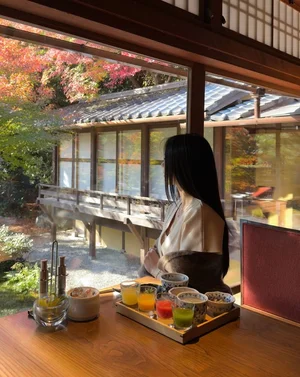
Within weeks, millions of Americans—predominantly women, predominantly Gen Z and Millennials—were posting their new morning routines: warm water first thing. Congee for breakfast. Jujube dates in everything. House slippers on indoors. No cold food. No iced drinks. Goji berries, lotus seeds, and snow fungus soup replacing the protein shake that had been gospel for the past decade.
The hashtag #Chinamaxxing exploded. #BecomingChinese trended globally. Chinese TikTokers who'd spent years being ridiculed for their wellness practices watched, somewhat incredulously, as the entire Western wellness world turned to face East.
This wasn't a meme. Or rather, it started as one—but underneath the humor lay something profound.
Millions of people were quietly admitting something the Western wellness industry had been desperate to hide: the American approach to health, wellness, and the body is broken. And it has been for a long time.
What's happening right now—this mass migration toward Traditional Chinese Medicine, holistic living, and ancient Eastern wisdom—is not a TikTok trend. It's a symptom. A signal that something deep in the American wellness ecosystem has failed, and people are instinctively reaching for something older, quieter, and fundamentally different.
For wellness brands positioning themselves in 2026, this moment is everything. Because the brands that understand what Chinamaxxing actually represents—and position themselves accordingly—will capture the next wave of consumer loyalty.
The brands that dismiss it as a passing fad will watch their audience disappear.
What Chinamaxxing Actually Is (Beyond the Meme)
Let's understand the phenomenon before we strategize around it.
The "Becoming Chinese" trend reflects a general growing interest in wellness practices rooted in Chinese culture and Traditional Chinese Medicine (TCM)—a health system stemming from thousands of years of East Asian medicine that encompasses food therapy, herbal medicine, acupuncture, cupping, movement like qigong, and massage.
Users are trying out these routines in their daily lives, sharing photos and TikToks of their breakfasts, drinks, and new wellness rituals inspired by TCM. The trend also emphasizes respect and mindfulness—fans are encouraged to learn from these practices rather than appropriating them.
Posts about "chinesemaxxing"—which amounts to smoking cigarettes crouched low to the ground and donning toggle jackets—started cropping up online throughout 2025. But the wellness dimension is what's driving the massive, sustained engagement.
These videos often highlight subtle but significant lifestyle changes, such as drinking warm water instead of iced beverages, practicing Baduanjin (an ancient Chinese wellness exercise), exploring traditional Chinese medicine, preparing basic Chinese dishes, as well as reshaping diet, sleep, and work routines to achieve a more balanced daily rhythm.
Google searches for TCM in the UK and US have been steady for the past five years, but shot up and doubled in December 2025.
This isn't random curiosity. This is demand—sudden, massive, and deeply intentional.
What started as copying routines is becoming a quiet philosophy. It's not just drinking hot water—it's about balance, living with nature, and valuing tomorrow over today's quick fix.
Why This Is Happening Now (The Death of American Wellness)
To understand Chinamaxxing, you need to understand what it's replacing.
The American wellness industry—worth over $1.2 trillion globally—has spent the last two decades building an empire on a single promise: optimize your body like a machine.
Protein shakes. Intermittent fasting windows. Biohacking. Cold plunges. High-intensity interval training. Macro tracking. Sleep optimisation technology. Supplement stacks designed to "hack" your biology.
The message was consistent: your body is a system. Systems can be optimised. Optimisation equals performance. Performance equals success.
It sounded scientific. It felt productive. It was completely divorced from how human bodies actually function.
The American wellness industry sold optimisation. It forgot to sell wholeness.
And now, millions of people are noticing the gap.
A therapist based in North Carolina who hopped on the "becoming Chinese" trend said TCM-inspired practices feel like an antidote to our current demanding beauty and wellness culture. "Traditional Chinese practices are a lot more accessible than what our ways of getting healthy tend to be in our culture," she explained. In Western wellness culture, fitting in regular gym sessions while being a full-time worker is the mere baseline—a standard that feels strict to the point of being a "moral measure." TCM showed her ways to look after herself that are simpler to achieve: drink hot water, wear house slippers so your feet don't touch the floor, and add jujube to your oatmeal.
This is the key insight: people aren't abandoning wellness. They're abandoning the American version of wellness because it's exhausting, expensive, and somehow makes them feel worse, not better.
TCM offers something the optimisation culture never did: a system that doesn't demand perfection. That works with your body's natural rhythms instead of against them. That prioritises prevention over performance. That treats the body as an ecosystem to nourish, not a machine to hack.
"For a long time, Chinese culture was stereotyped as poor, rude, uneducated, smelly or loud," said one Chinese Italian TikTok user. "Now people are seeing it as a culture with centuries of history and wisdom, especially when it comes to medicine and preventative health."
The shift isn't about Chinese culture being suddenly "cool." It's about Western wellness culture finally revealing its limitations—and people looking elsewhere for answers.
The Geopolitical Layer: Why This Is Also About Power
Here's where it gets interesting for anyone paying attention to the bigger picture.
Chinamaxxing isn't happening in a vacuum. It's happening during a specific geopolitical moment—one where American cultural dominance is quietly, unmistakably eroding.
According to the 2025 Brand Finance Global Soft Power Index, China ranked second worldwide, with young adults aged 18-24 showing particularly high affinity for its culture and lifestyle.
China was ranked second in the 2025 Global Soft Power Index, placing it ahead of the UK for the first time.
Think about what that means: the country that Americans have been taught to view as competition, as threat, as "the other"—is now ranked as the second most culturally influential nation on earth. And young adults specifically are driving that ranking.
A notable example is the emergence of "TikTok refugees"—overseas users who migrated to Xiaohongshu, a Chinese platform often described as China's equivalent to Instagram and Pinterest, amid concerns over potential TikTok bans in the U.S. On Xiaohongshu, they found fragments of ordinary Chinese life: grocery hauls, medical bills, and memes.
Americans didn't flee to a Chinese app because they were forced to. They fled because the American alternative felt hollow. They found something on Chinese platforms that American platforms couldn't offer: authenticity. Community. A different way of living that made more sense than what they'd been sold.
This is cultural soft power in its purest form. Not propaganda. Not marketing. Just a civilisation offering something that another civilisation desperately needs—and people choosing it voluntarily.
The "death of American empire" isn't happening through military conquest or economic collapse. It's happening through culture. Through millions of young Americans quietly deciding that the American way of living—the optimisation, the hustle, the constant self-improvement through technological means—isn't actually making them happy. Isn't actually making them healthy. Isn't actually making them whole.
And reaching, tentatively, for something ancient that promises a different kind of living.
This is what brand strategists should be watching. Not because China is "winning" in some zero-sum game. But because the cultural values that Western wellness brands have built their entire business model on—optimisation, performance, technological intervention—are being questioned at a fundamental level.
The brands that adapt to this shift will thrive. The brands that double down on the old model will slowly lose their audience.
What TCM Actually Teaches (The Principles That Are Taking Over)
Understanding Traditional Chinese Medicine isn't about becoming an expert in ancient healing systems. It's about understanding the philosophy that's resonating with millions of people right now—and why it's resonating.
TCM operates on several core principles that directly contradict the American wellness model:
Principle 1: Prevention Over Treatment
TCM's foundational philosophy is "preventive treatment of disease." You don't wait until you're sick to address your health. You maintain balance daily through food, movement, rest, and environment.
American wellness: "I'll optimise, and fix when I notice a problem." TCM: "I'll maintain balance so problems never arise."
This is why the practices going viral are so mundane: warm water, seasonal eating, adequate rest, gentle movement. They're not dramatic interventions. They're for daily maintenance.
Principle 2: The Body Has Seasons
TCM organises health around natural cycles. It sees the cyclical nature of all things. Different foods, different activities, and different levels of rest are appropriate for different seasons. Winter demands warmth, inward focus, and restoration. Summer demands activity, outward engagement, and expansion.
American wellness: "Push through every season at the same intensity." TCM: "Honour the rhythm. Rest in winter. Flourish in summer."
This directly addresses the burnout epidemic that's driving people away from American gym culture. You're not supposed to maintain the same workout intensity in January that you maintained in July.
Principle 3: Food Is Medicine
TCM doesn't separate nutrition from healing. Every food has properties—warming or cooling, nourishing or depleting—and choosing food based on your current state and the season is fundamental to health.
American wellness: "Eat these macros. Track these calories. Take these supplements." TCM: "Eat warm food in cold weather. Eat cooling food in summer. Listen to what your body needs."
The congee breakfasts, the jujube dates, the boiled apples before bed—these aren't arbitrary. They're application of a sophisticated food-as-medicine system that's been refined over thousands of years.
Principle 4: Balance, Not Extremes
TCM values the middle path. Not too much exercise, not too little. Not too much stimulation, not too much rest. Balance between yin and yang, between activity and stillness, between internal and external.
American wellness: "More is better. Harder is stronger. Extreme is effective." TCM: "Balance is health. Moderation is wisdom. Gentleness is power."
This is why the trend resonates so deeply with women specifically. Western wellness culture has told women to push harder, optimise more, and perform relentlessly. TCM offers permission to be gentle with themselves—and frames that gentleness as wisdom, not weakness.
Tips and Practices: How to Actually Incorporate TCM Principles Into Your Life
Here's how to integrate the principles driving Chinamaxxing into your daily life—not as a trend to perform, but as a genuinely sustainable wellness practice.
Morning Practices
Warm Water First
The single most emphasised practice in the entire trend. Before coffee, before food, before anything—drink warm or hot water.
Why it works: Warm water aids digestion, supports circulation, and gently activates your digestive system after overnight fasting. Cold water, according to TCM, contracts the digestive system and depletes yang energy.
How to do it: Keep a thermos by your bed. First thing upon waking, drink 250-500ml of warm (not boiling) water. Plain, or with a slice of lemon if desired. Wait 15-20 minutes before eating.
Products:
Warming Breakfast
Replace cold yoghurt, overnight oats, and smoothie bowls with warm, nourishing foods.
Why it works: Cold foods in the morning deplete digestive energy (according to TCM). Warm foods nourish and activate without draining.
How to do it:
Congee (rice porridge): Rice cooked slowly in water until creamy. Add goji berries, jujube dates, and a drizzle of sesame oil. Takes 30 minutes but can be meal-prepped on Sunday for the week.
Boiled eggs with warm toast: Simple, warming, grounding.
Oatmeal with warming spices: Cinnamon, ginger, and jujube dates instead of cold toppings.
Products:
Organic Jujube Dates (~$12 for 1lb)
Organic Goji Berries (~$15 for 1lb)
Throughout the Day
Keep Your Feet Warm
One of the most emphasised TCM practices: never let your feet touch cold floors.
Why it works: TCM teaches that the feet contain energy meridians connected to your entire body. Cold feet create internal cold that depletes energy and disrupts circulation.
How to do it: Wear house slippers indoors. Always. This is non-negotiable in TCM philosophy.
Products:
Drink Warm Liquids Throughout the Day
Not just in the morning. All day. Warm tea, warm water, warm broth.
Why it works: Constant warm liquid intake supports digestion, maintains internal warmth, and keeps energy flowing.
How to do it: Carry a thermos everywhere. Replace iced coffee with warm tea. Replace cold water with warm water.
Recommended Teas:
Ginger tea: Warming, supports digestion, boosts circulation
Red date (jujube) tea: Nourishes blood, supports energy
Chrysanthemum tea: Cooling in summer, supports liver health
Osmanthus tea: Gentle, sweet, warming
Products:
Organic Ginger Tea (~$10)
Jujube and Goji Tea Blend (~$14)
Eat Seasonally
Winter foods should be warm. Summer foods should be cool. Don't eat watermelon in January.
Why it works: Seasonal eating aligns your body with natural rhythms, supports immune function, and prevents energetic depletion.
Winter foods (now): Root vegetables, ginger, garlic, onions, soups, stews, congee, warming spices (cinnamon, star anise, cloves)
Spring foods: Green vegetables, sprouts, lighter cooking methods, less heavy sauces
Summer foods: Cucumber, mung beans, watermelon, lighter meals, cooling herbs
Autumn foods: Pears, sweet potatoes, mushrooms, gentle warming back to heavier foods
Evening Practices
Boiled Apple Before Bed
This went viral for good reason. It's simple, warming, and genuinely soothing.
Why it works: Cooked apple is easier to digest than raw, releases gentle natural sugars that support sleep, and the warmth calms the nervous system.
How to do it: Core an apple, slice it, simmer in water with a cinnamon stick and a few cloves for 15 minutes. Drink the warm water and eat the apple.
Gentle Evening Movement
Replace intense evening workouts with gentle stretching, qigong, or Ba Duan Jin (the ancient Chinese 8-piece brocade exercise).
Why it works: Evening is yin time—restoration, not stimulation. Intense exercise raises cortisol and disrupts sleep. Gentle movement promotes circulation without activation.
Products:
Ba Duan Jin Beginner Guide (~$15)
Warm Bath with Ginger
Two to three times per week, soak in a bath with fresh ginger or ginger essential oil.
Why it works: Ginger is one of the most warming herbs in TCM. A ginger bath promotes circulation, relaxes muscles, and prepares the body for deep sleep.
How to do it: Slice fresh ginger, simmer in water for 10 minutes, strain into your bath. Or add 5-10 drops of ginger essential oil.
Products:
Fresh Organic Ginger (~$5)
Pure Ginger Essential Oil (~$18)
Epsom Salts (to combine) (~$8)
Supplemental Practices
Gua Sha (Already Mainstream, But Worth Revisiting)
Gua sha has been mainstream in Western beauty for years. But most people use it purely cosmetically. TCM uses it therapeutically—on the back, shoulders, and neck to release tension and promote circulation.
Products:
Jade Gua Sha Tool (~$28)
Rosehip Oil for Gua Sha (~$22)
Acupuncture (If Accessible)
The single most researched TCM practice with Western scientific validation. Regular acupuncture addresses chronic pain, anxiety, hormonal imbalance, and digestive issues.
Not a daily practice, but a quarterly investment in genuine healing.
Baduanjin (The 8 Pieces of Silk)
An ancient set of 8 exercises that takes 15-20 minutes and can be done anywhere. Gentle, flowing movements that promote circulation, calm the nervous system, and support joint health.
This is the practice that's going most viral among women specifically because it's accessible, gentle, and genuinely effective.
What This Means for Wellness Brand Positioning in 2026
Now the strategic layer. Because this cultural shift has direct implications for how wellness brands position themselves.
The Brands That Will Win
Brands that position around prevention, not performance.
The optimisation era is ending slowly. Brands that offer "maintain your balance" instead of "hack your biology" will capture the shifting audience. More and more people want to do more but also do it better, and better often means -- in harmony, and that is worth noting.
Brands that embrace seasonal living.
Products that change with the seasons. Marketing that honours cyclical rhythms. Content that validates rest in winter and expansion in summer.
Brands that offer simplicity, not complexity.
TCM's appeal is partly that it's simple. Warm water. Warm food. Rest. Gentle movement. Brands that cut through the supplement stack noise with "just do these three things" will resonate.
Brands that integrate Eastern wisdom without appropriating it.
The trend itself shows how to do this: credit the source, learn authentically, share with respect. Brands that partner with TCM practitioners rather than simply copying aesthetics will build trust.
Brands that position wholeness over optimisation.
Not "become the best version of yourself." But "become whole. Feel good. Live in balance."
The Brands That Will Lose
Brands built entirely on optimisation language.
"Hack your sleep." "Optimise your gut." "Biohack your way to peak performance." This language is becoming the exact opposite of what consumers want to hear. It is not because it is not working, it is because most of it remains unsustainable for many, out of reach for others, and most importantly, it is approached with an energy of performance over wellness.
Brands that ignore seasonal variation.
Selling the same products, with the same marketing, year-round. The new consumer wants seasonality acknowledged. We are slowly realising the limitations and benefits of our new world, but we are also seeking wisdom that has been known across generations and countries for centuries. The world sees it, acknowledges the sharing like
Brands that add complexity instead of reducing it.
More supplements, more protocols, more optimisation layers. The trend is moving toward less, not more. Go to the essential and build on what feels good from within, less on what it looks like, more on what it allows you to become.
Brands that dismiss TCM as unscientific.
Whether or not you believe in TCM's theoretical framework, dismissing thousands of years of accumulated wisdom while millions of people are actively seeking it is a positioning disaster.
What This Means for B0LD and Our Clients
At B0LD, we work with an impressive number of female founders and wellness brands. Which means this cultural shift hits our world directly.
Here's what we're advising our clients right now:
Reassess your positioning language.
If your messaging is built on optimisation, performance, and biohacking—soften it. Not completely. But add warmth, balance, and wholeness to the conversation.
Before: "Optimise your morning routine for peak performance." After: "Nourish your mornings. Build a routine that honours your body's rhythms, not someone else's expectations."
Create seasonal content.
Stop posting the same content year-round. Winter content should feel warm, restorative, and inward. Summer content should feel expansive, active, outward.
This isn't just aesthetics. It's positioning that aligns with where your audience's energy actually is.
Integrate Eastern wellness without appropriation.
Partner with TCM practitioners for content collaboration. Credit sources. Educate before you sell. Position your brand as a bridge between ancient wisdom and modern accessibility—not as someone copying aesthetics.
Simplify your offers.
If you're offering 15 different supplements and a 30-step protocol, the current consumer is going to scroll past you. Offer three things that work. Position simplicity as sophistication.
Target the "quiet wellness" audience.
The woman who's tired of being told to grind harder, optimise more, perform better. The woman who wants permission to rest, to eat warm food, to move gently, to live in balance whilst still hitting her goals and having success.
She's your client. Position for her specifically.
This is the kind of positioning work we do with our clients through our DWY and DFY offerings—adapting messaging and strategy to reflect the cultural moment their audience is actually in.
DIY Path:
Our Positioning Sprint in a Box ($199) includes messaging frameworks that help wellness brands adapt their positioning to shifting consumer values—including the current move toward holistic, prevention-based wellness.
DWY Path:
Our 90-Day Positioning Sprint ($1,800) includes cultural trend analysis specific to your niche and positioning adaptation that keeps your brand relevant as consumer values shift.
DFY Path:
Our agency retainers ($2,500-$7,500/month) include ongoing cultural trend monitoring and positioning adaptation—so your brand stays aligned with where your audience is actually moving, not where they were six months ago.
The Bigger Picture: What Chinamaxxing Actually Tells Us
Step back from the TikTok videos and the congee recipes for a moment.
What's actually happening here is something much larger than a wellness trend.
Millions of people in the most technologically advanced civilisation on earth are voluntarily turning to practices developed thousands of years ago. Not because they're forced to. Not because modern medicine failed them (though sometimes it has). But because something in their gut told them that the way they'd been living—optimising, performing, grinding—wasn't actually healthy.
It was just an activity dressed up as wellness.
The messaging is often geared towards female netizens, emphasising the need for women in particular to keep their bodies warm to cultivate their yang energy. This resonates because women have been told for decades that their bodies are problems to solve. TCM offers a completely different framework: your body is an ecosystem to nurture.
Unlike past fads focused on exotic symbols, this phenomenon centres on adopting lifestyle habits rooted in traditional Chinese wisdom, reflecting a deeper, more participatory engagement with Chinese culture.
This isn't superficial. It's not people collecting aesthetic props for their Instagram feed. It's people genuinely restructuring their daily lives around different values.
From performance to prevention. From optimisation to balance. From complexity to simplicity. From individualism to collective wisdom. From technological intervention to natural rhythm.
These aren't small shifts. These are civilisational values changing in real time.
And for wellness brands, for female founders, for anyone building a business that touches on health, lifestyle, or wellbeing—this is the moment to position yourself on the right side of that shift.
Not by chasing the trend. By understanding what it actually represents. And building a brand that honours those deeper values.
Because Chinamaxxing will eventually fade as a meme. The TikTok videos will slow down. The hashtag will lose momentum.
But the underlying shift—away from optimisation culture, toward holistic living—that's not going anywhere.
That's the direction of travel. And the brands that position themselves there now, before it becomes mainstream and crowded, will own the next decade of wellness.
More cultural trend analysis and brand positioning:
What the Trump-Maduro Crisis Means for Your Brand Positioning
Niche Marketing for Wellness Brands: Why General Agencies Can't Crack This Market
The Year the White Rabbit Caught Me: What Happens When Perfect Isn't Aligned
Subscribe to Bold Dispatch for weekly insights on cultural trends, brand positioning, and building wellness businesses that stay relevant as consumer values evolve.
The brands that win in 2026 won't be the ones who chased the loudest trend. They'll be the ones who understood what the trend was actually saying—and positioned themselves to serve the deeper need it revealed.